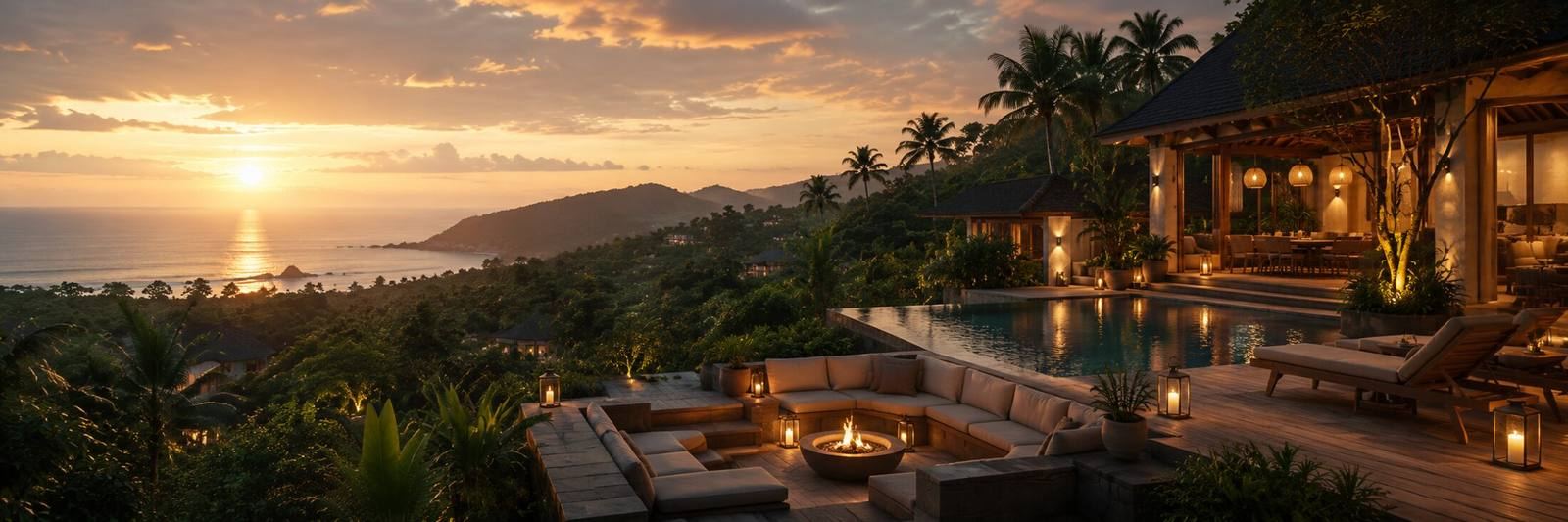
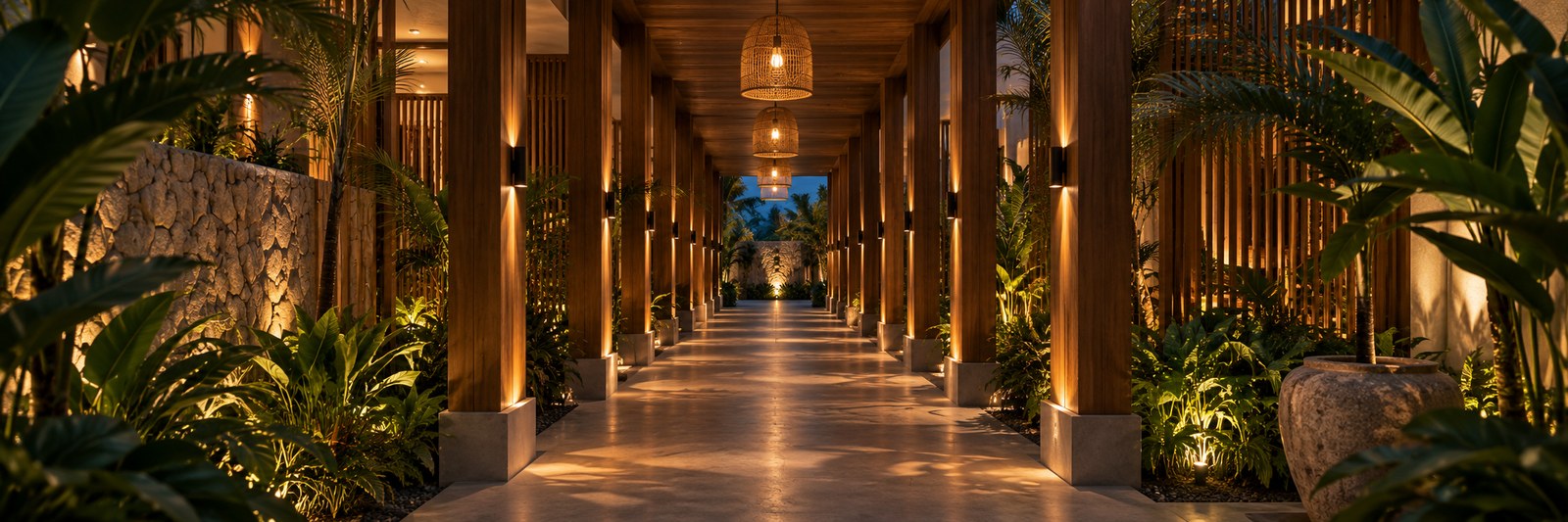
Some destinations are visited. Others are felt. Nestled within remarkable landscapes, Aether Nest & Aether Den invites guests to experience a slower, more intentional way of travelling—where thoughtful design, genuine hospitality and nature come together to create memories that endure long after the journey ends.
A little over a minute to understand Aether Nest & Aether Den in a different way than through numbers.
The Concept
Boutique co-living · South Lombok
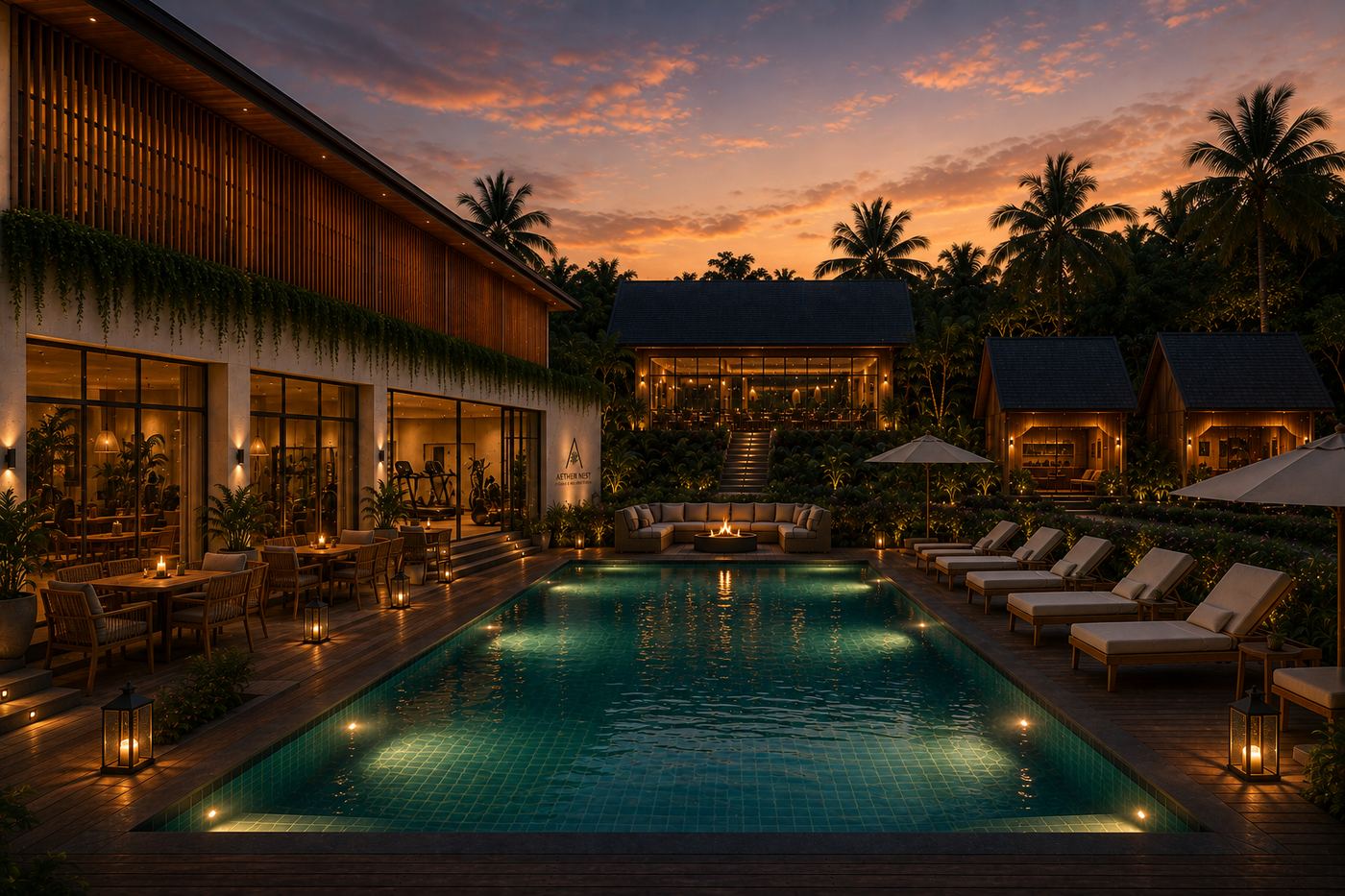
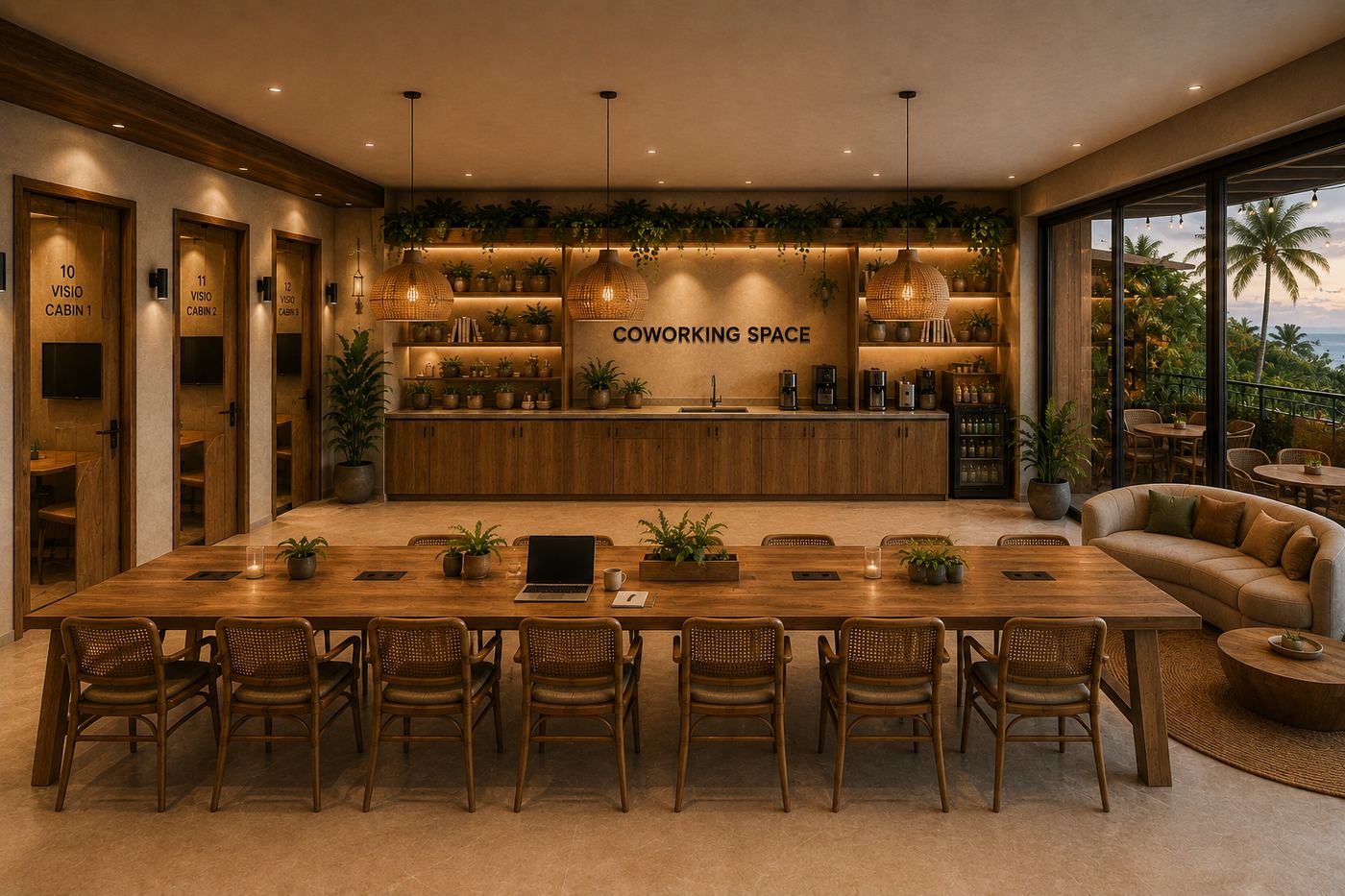
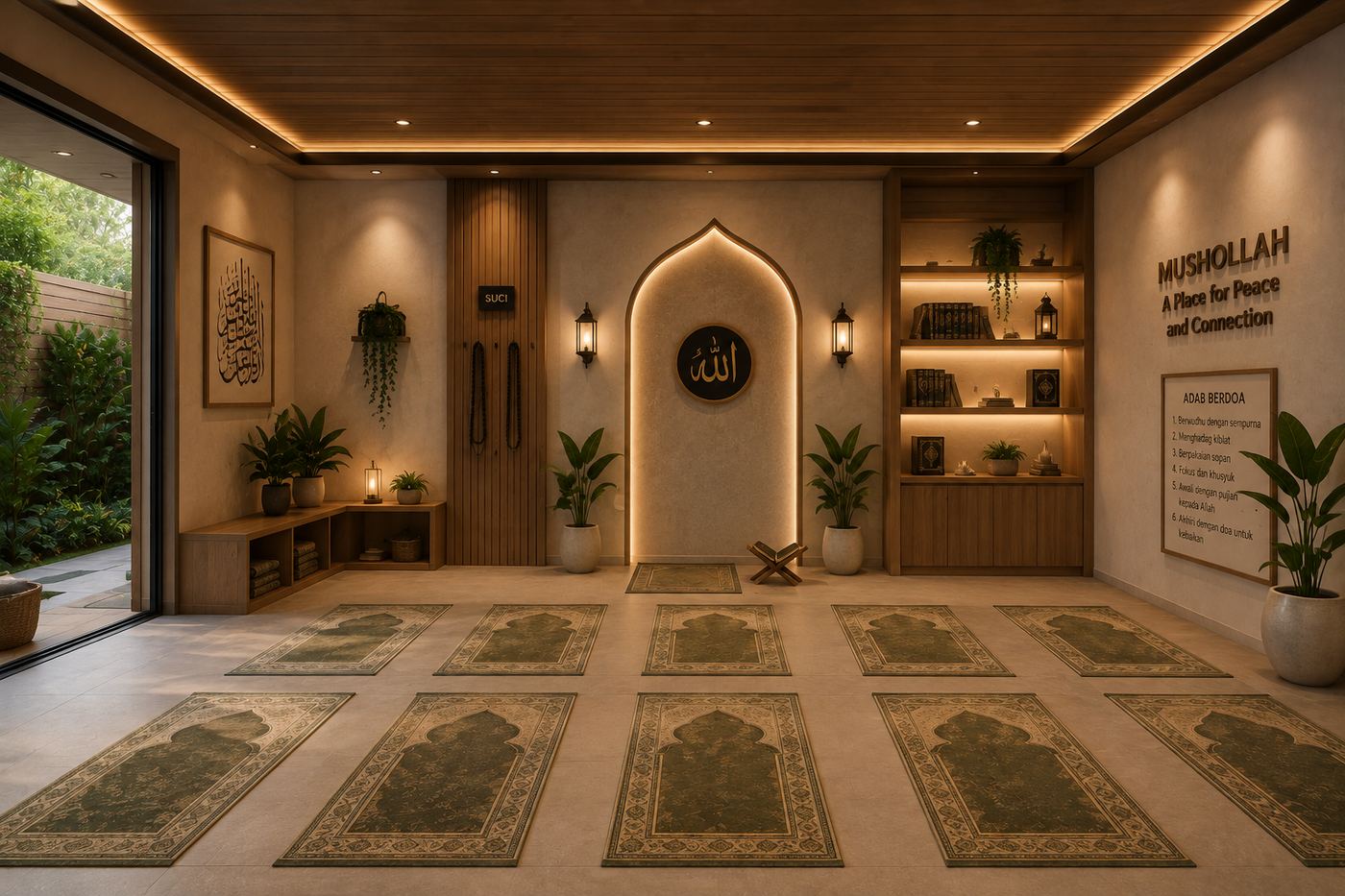
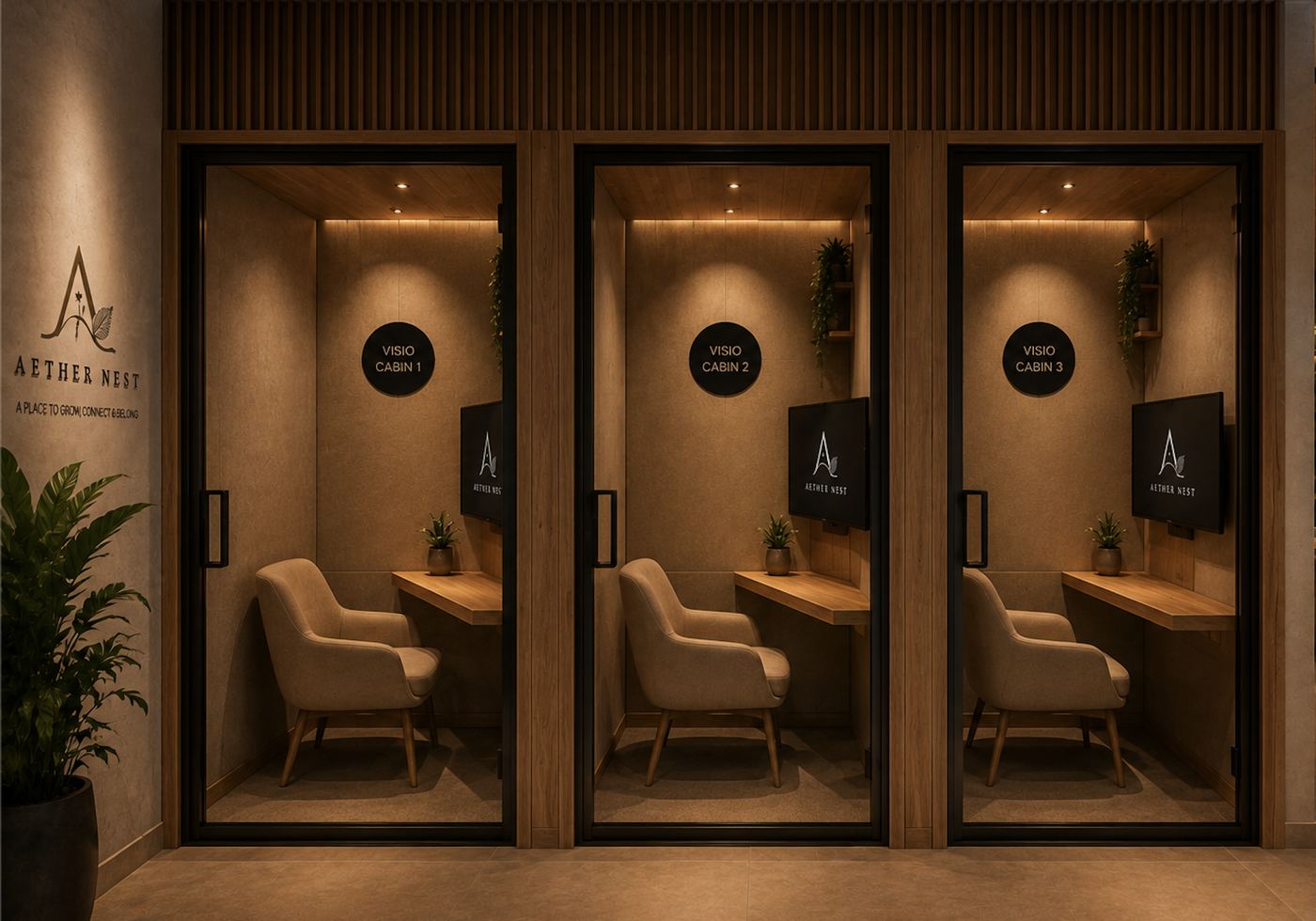
Aether Nest & Aether Den brings true intimacy to Lombok's south coast — Indonesia's next premium destination, driven by the rise of Mandalika, the arrival of international brands (Hyatt, the Rafa Nadal Academy), and new direct flight routes opening up. The site is home to 12 private double pods (all identical) spread across two complementary residences — Aether Nest, for women, and Aether Den, for men — paired with shared signature amenities: a swimming pool, a warung & café, a co-working space with a video conference room and a vlog/podcast room, a gym, a sauna, a yoga terrace and a mushollah — that no traditional hostel or co-living residence can offer at scale.
01
True Intimacy
12 identical private double pods per residence, spread across two buildings (~1,050 m² of land per residence), each designed so every resident gets real private space rather than a shared dorm bed.
02
Purpose-Built Residences
Two dedicated buildings — Aether Nest and Aether Den — designed around the pods, with a ground floor of communal spaces and an upper floor of pods, rather than a converted hotel.
03
Signature Amenities
Swimming pool, warung & café, co-working space with video conference room and vlog/podcast room, gym, sauna, yoga terrace, mushollah, laundry and high-speed fiber Wi-Fi across all shared and private spaces come included as standard.
04
One Site, One Standard
South Lombok — selected for its land security, market momentum, and the arrival of major international players (Hyatt, the Rafa Nadal Academy, Mandalika SEZ).
Aether Nest — women's residence
A place to grow, connect & belong.
Aether Den — men's residence
A place to live, create & connect.
24
Pods per residence · 24 residents max (12 double pods)
South Lombok
Destination
Fundraising
Status
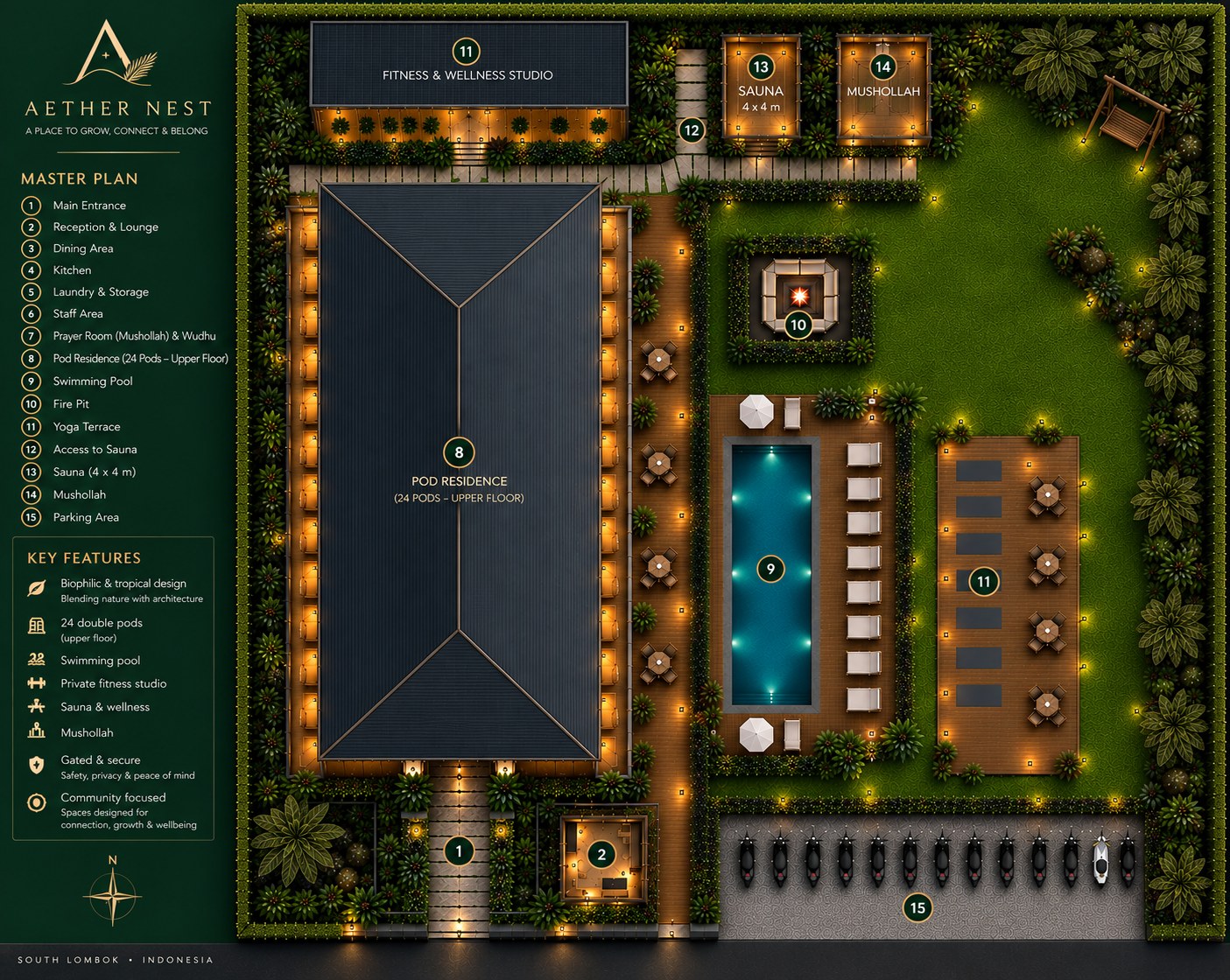
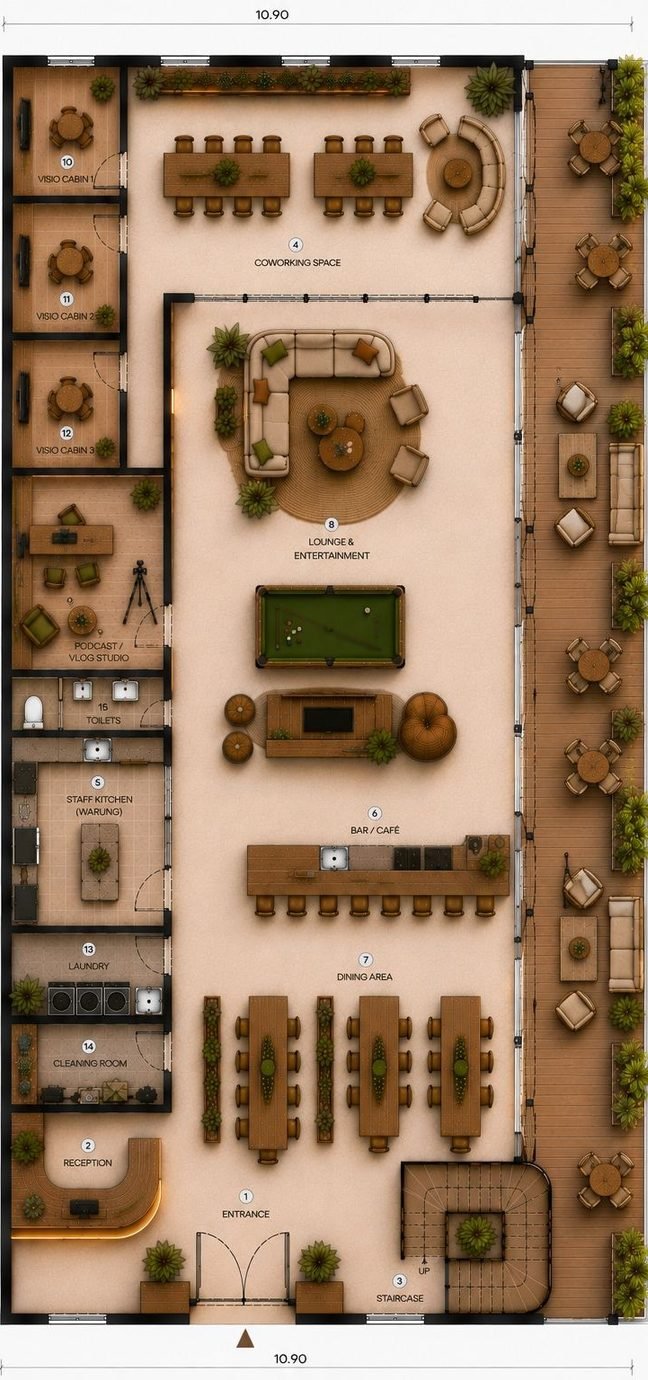
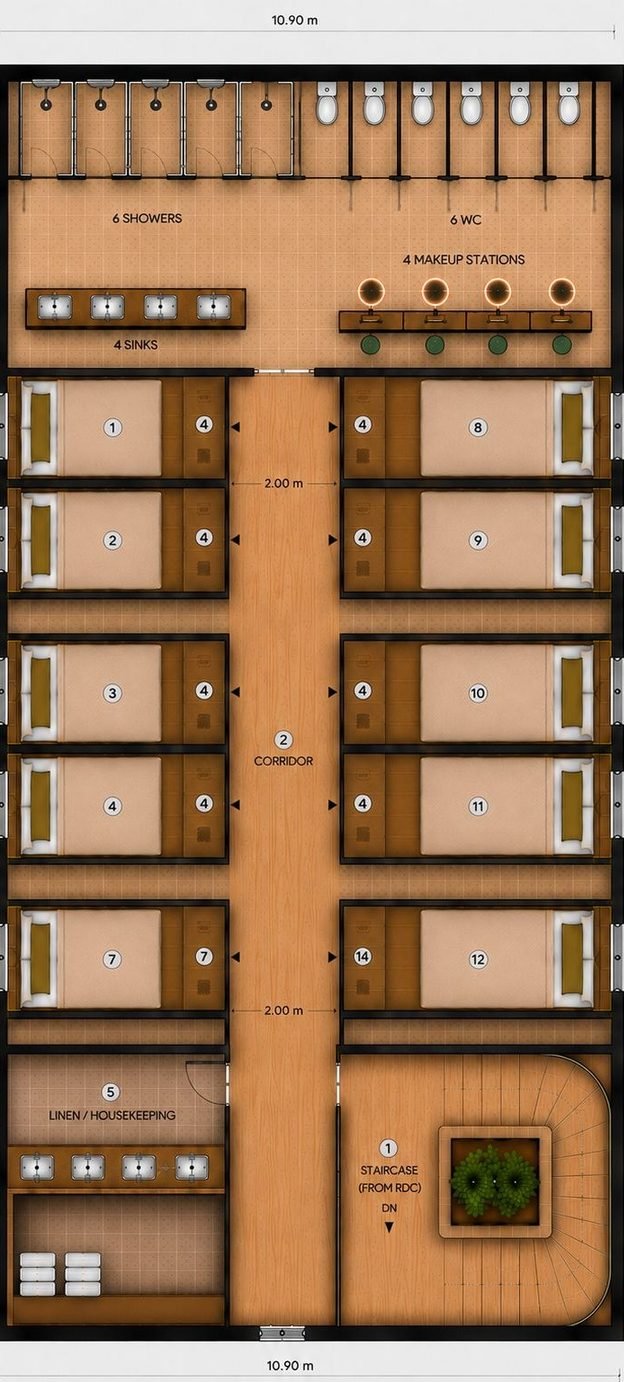
Plans & Architecture
Every square meter, intentional
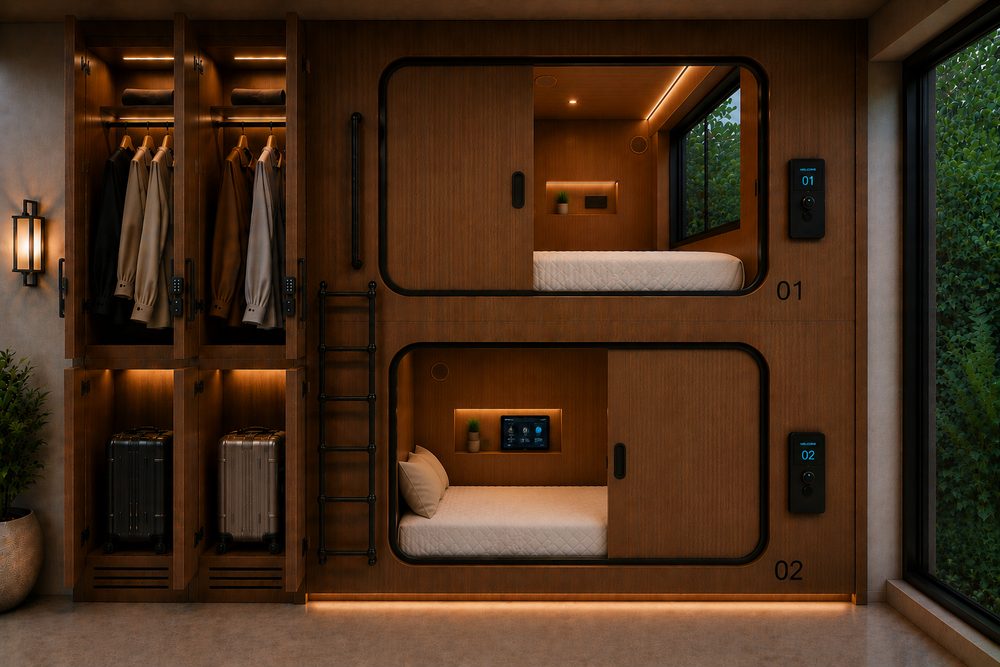
Clarification: "Pod Residence (24 Pods)" correctly refers to the 24 individual stacked pods (12 "double pod" structures, 2 stacked pods per structure, 1 guest per pod). The "24 double pods" bullet under Key Features contains a wording error — read as 12 double-pod structures / 24 individual pods, not 24 double structures.
1 — Main Entrance
2 — Reception & Lounge
3 — Dining Area
4 — Kitchen
5 — Laundry & Storage
6 — Staff Area
7 — Prayer Room (Mushollah) & Wudhu
8 — Pod Residence (24 individual pods — Upper Floor)
9 — Swimming Pool
10 — Fire Pit
11 — Yoga Terrace
12 — Sauna Access
13 — Sauna (4x4 m)
14 — Mushollah
15 — Parking
Ground Floor
Pods Floor
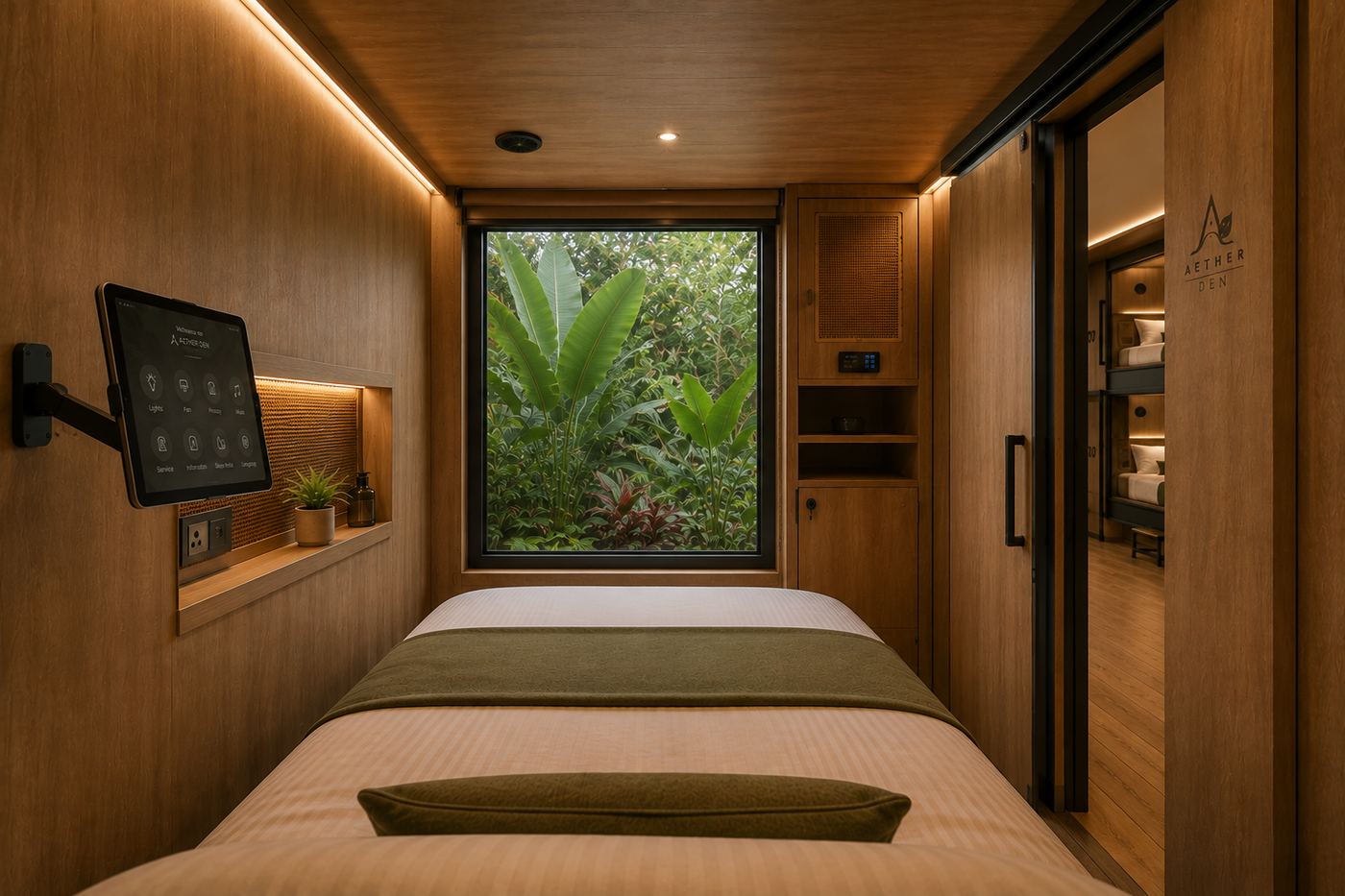
Pod Interior
Gallery
A glimpse on site
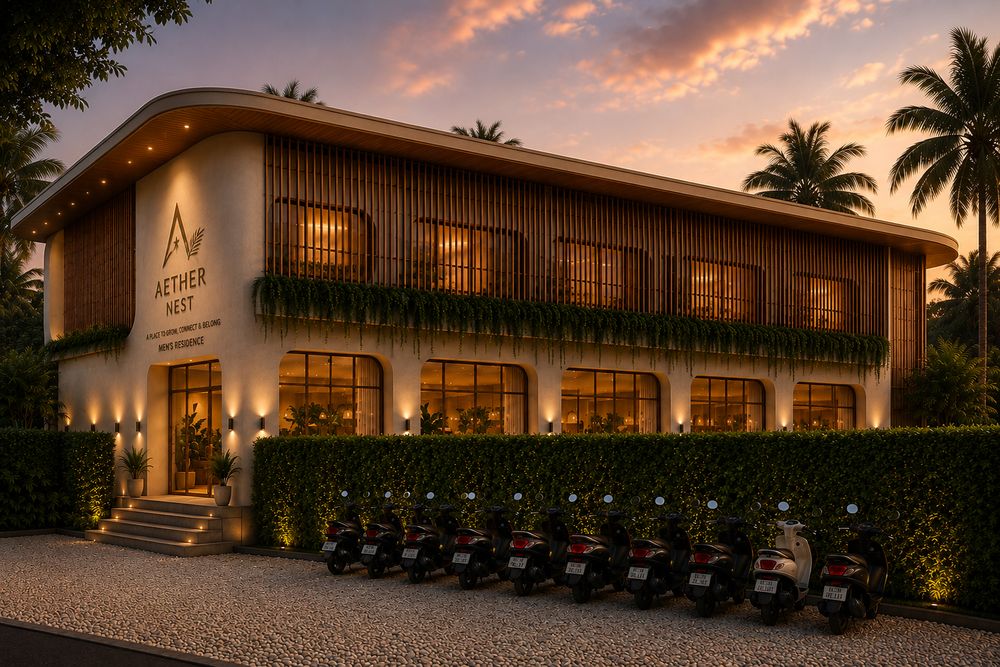
Aether Nest — Exterior
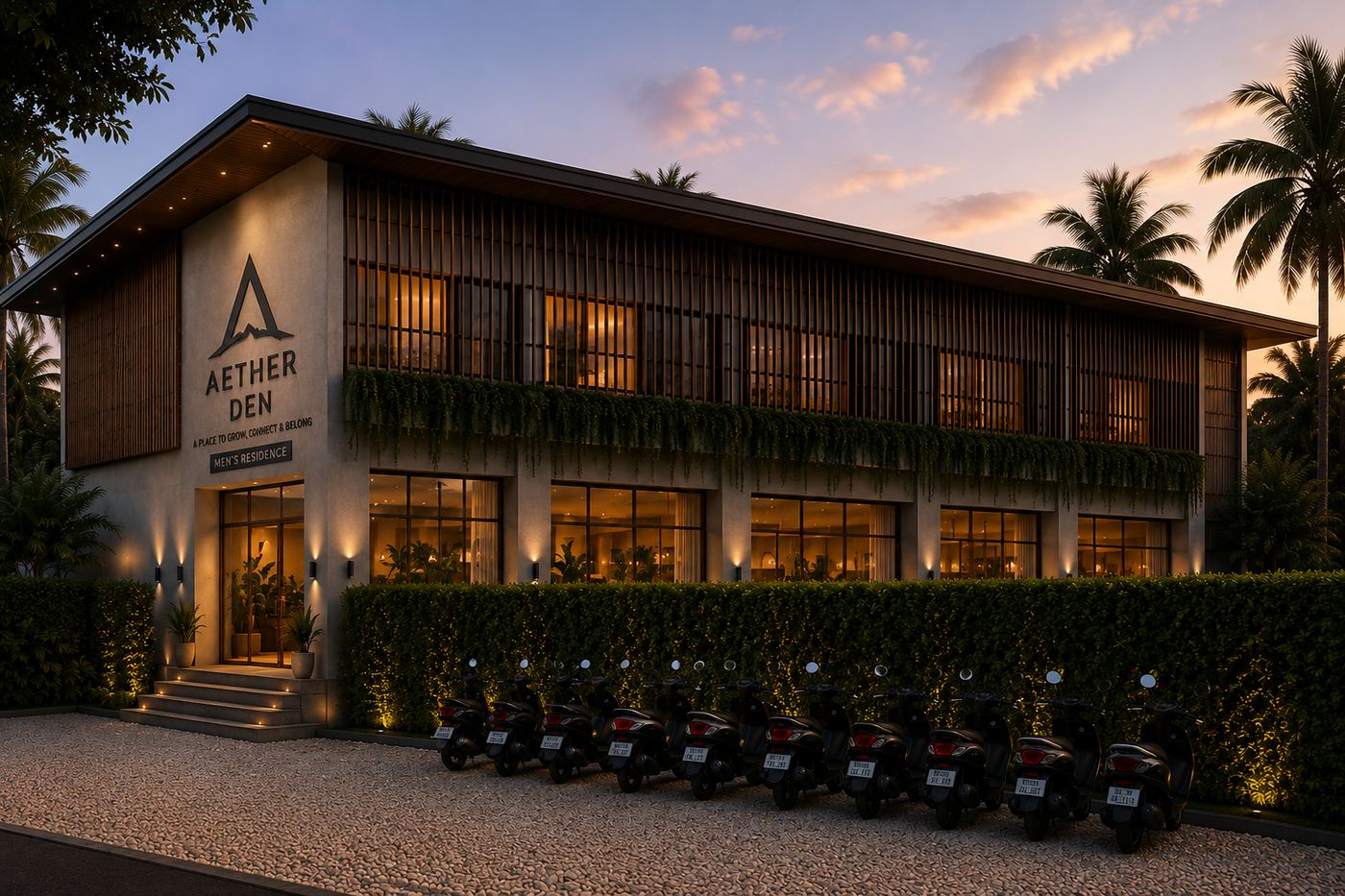
Aether Den — Exterior
Swimming Pool — Evening
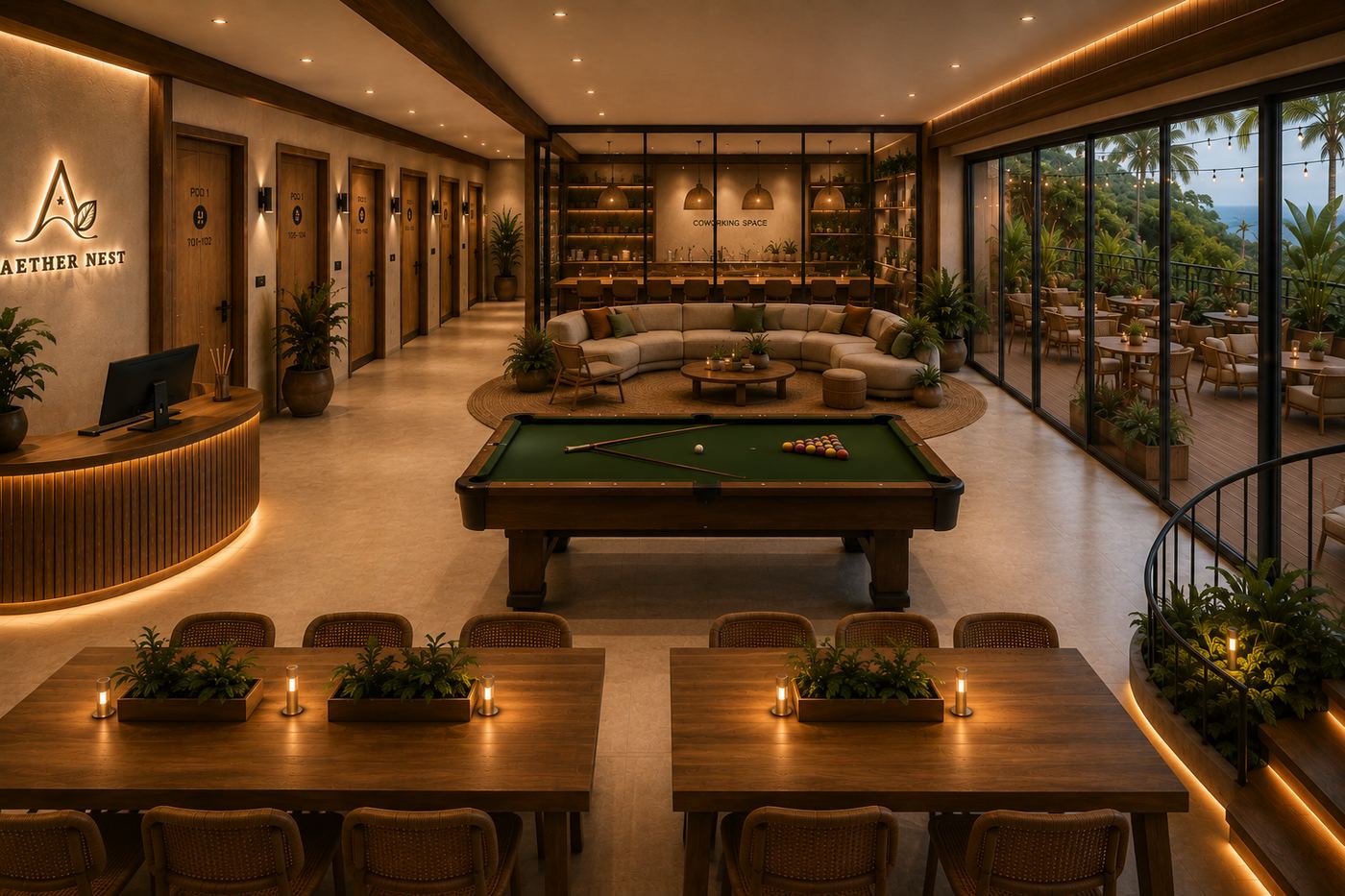
Co-Working Lounge
Mushollah & Wudhu
Visio Cabins
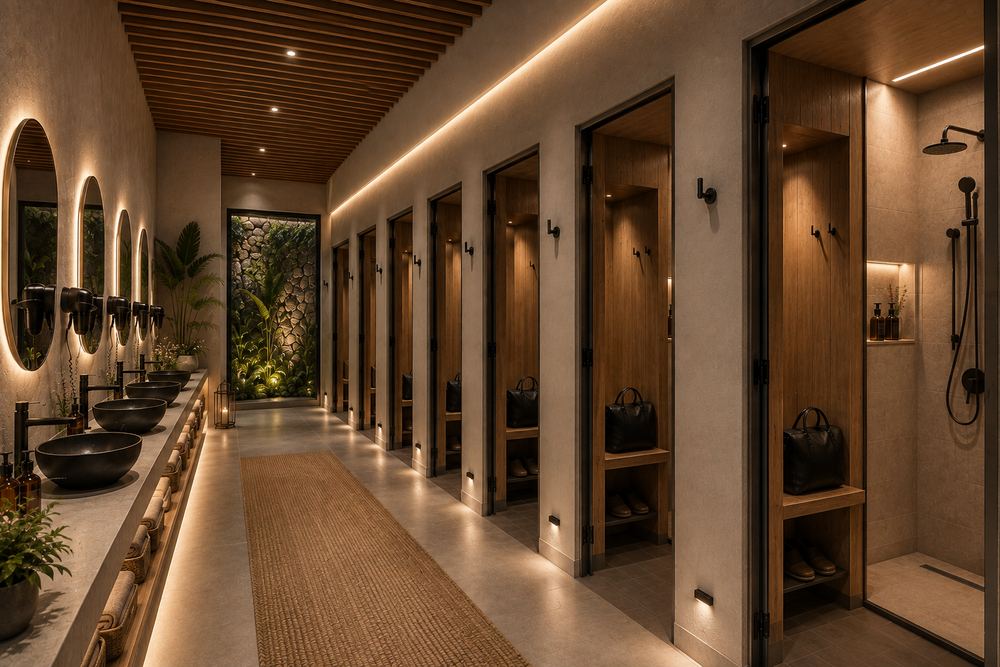
Locker Room & Showers — Aether Nest (Women's)
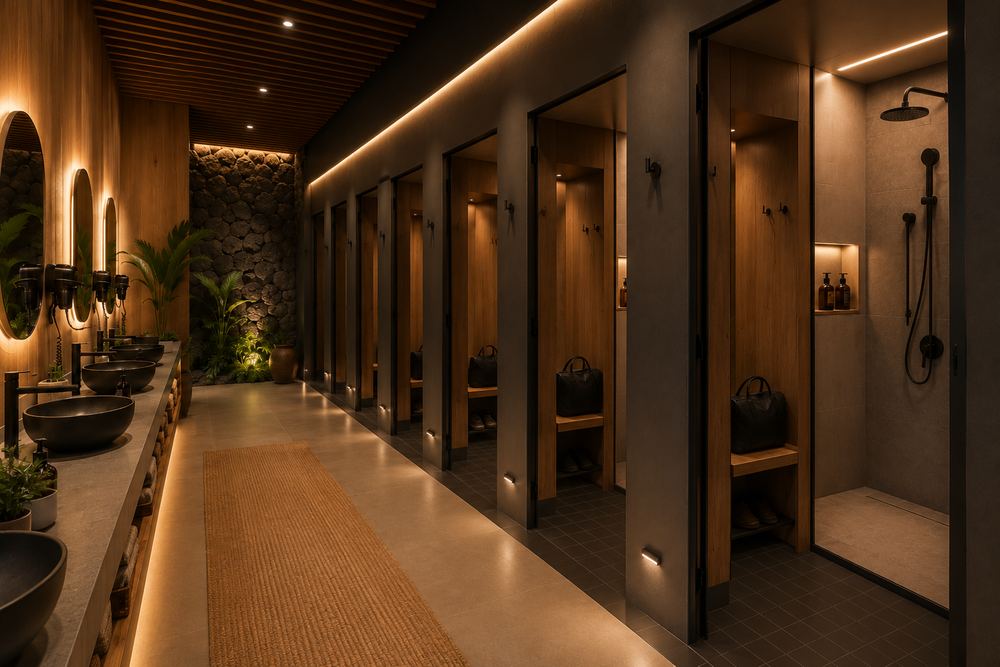
Locker Room & Showers — Aether Den (Men's)
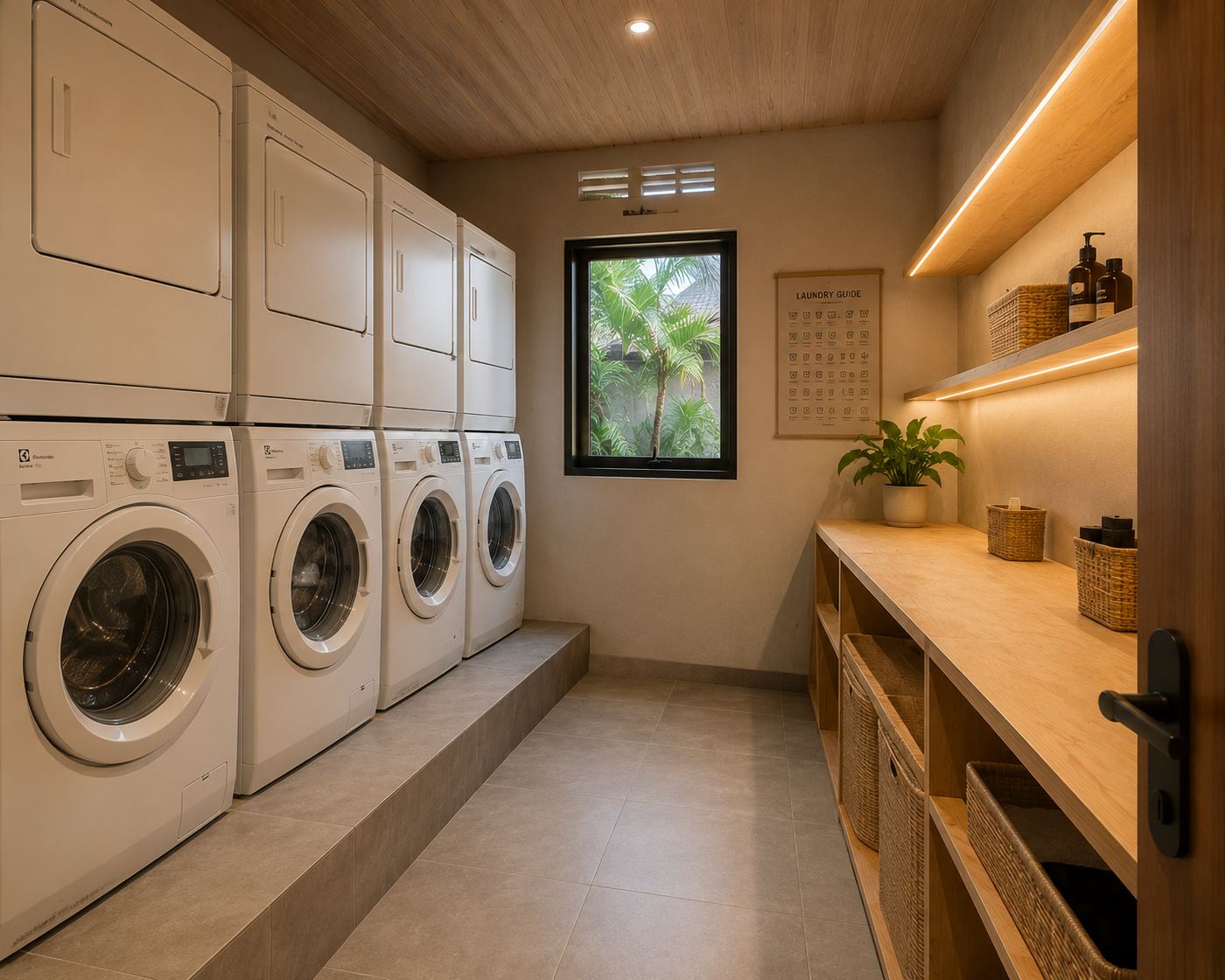
Laundry Room
Warung & Lounge
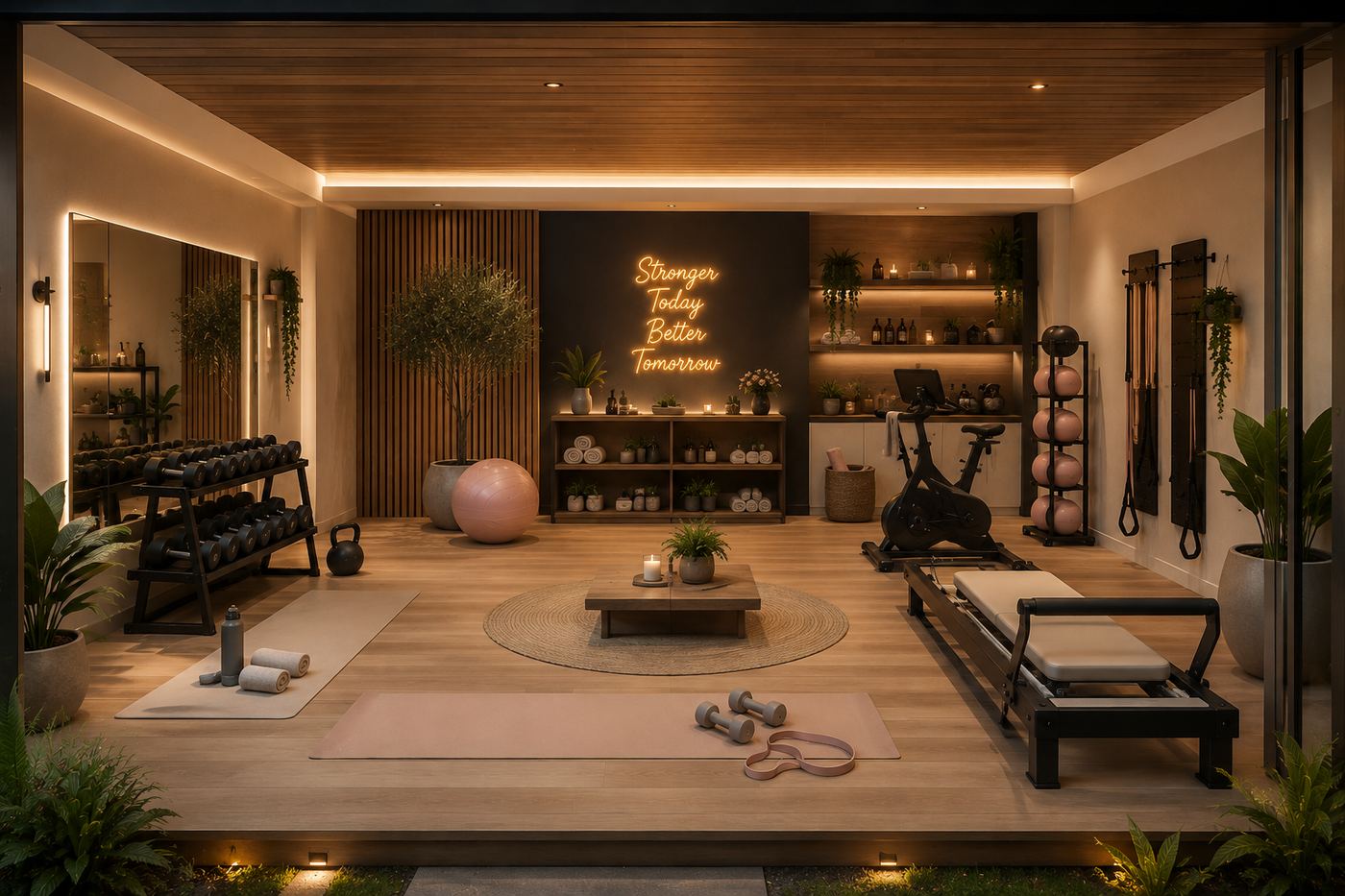
Fitness & Wellness Studio — Aether Nest (Women's)
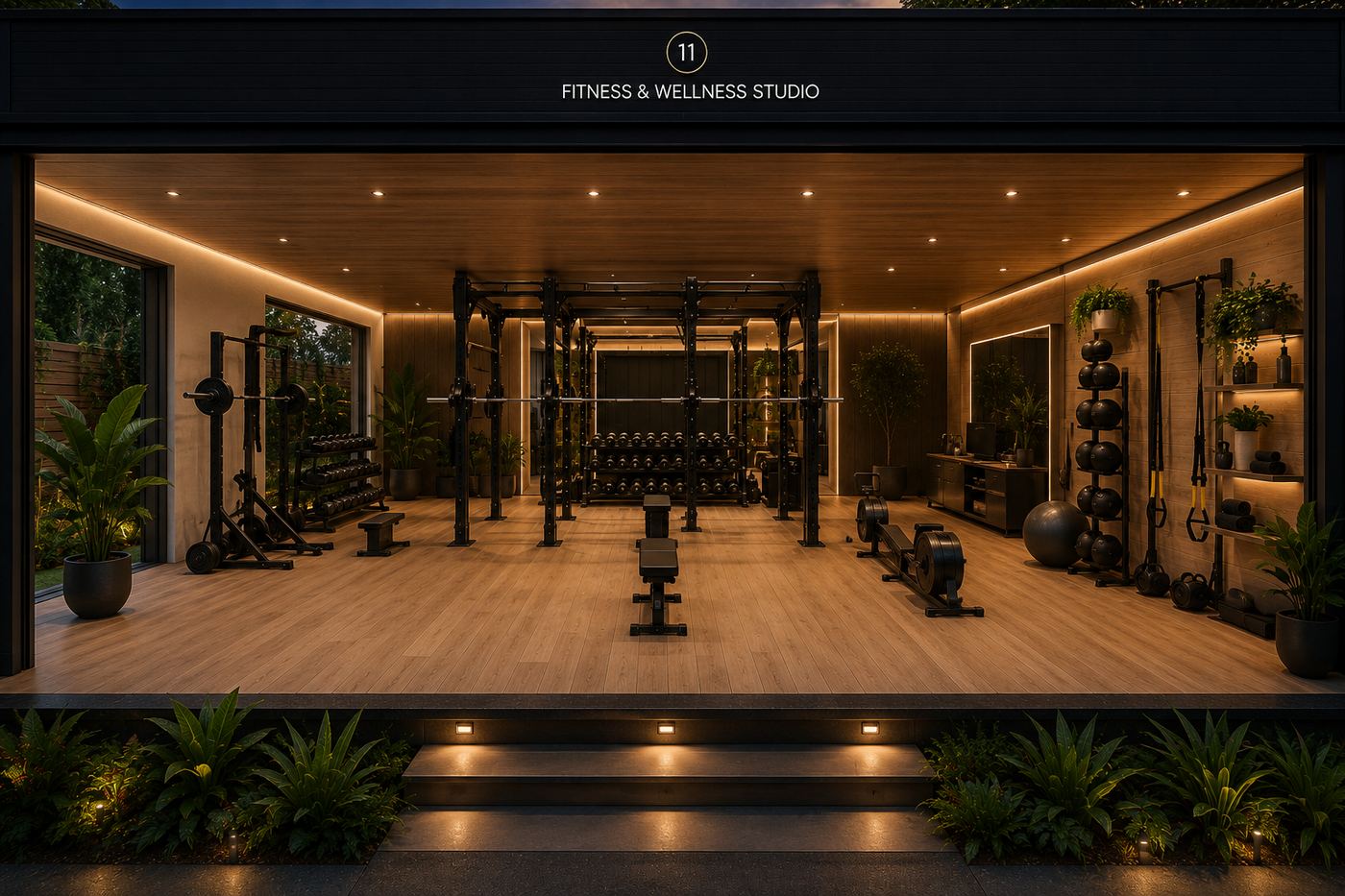
Fitness & Wellness Studio — Aether Den (Men's)
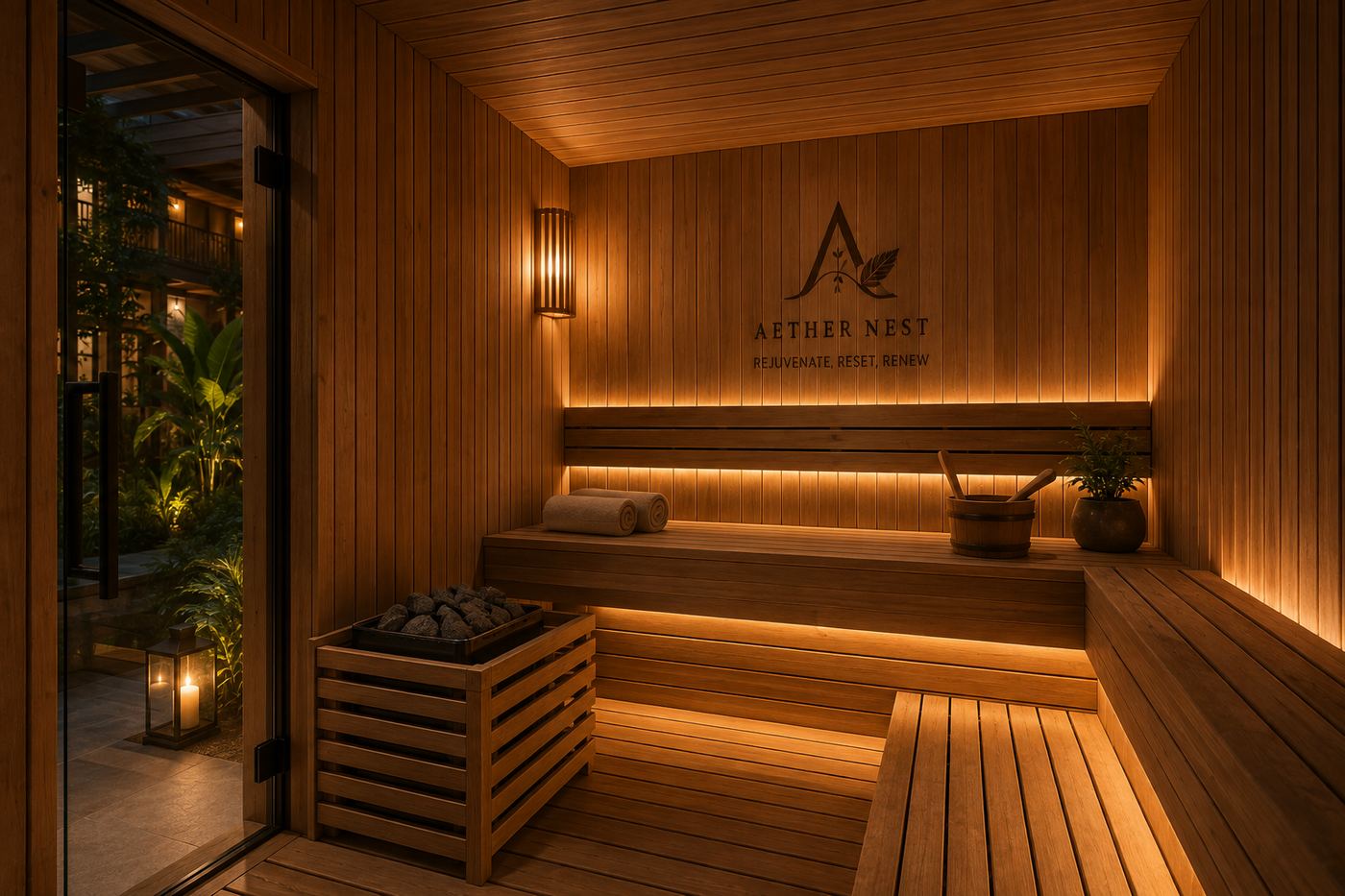
Sauna Pavilion
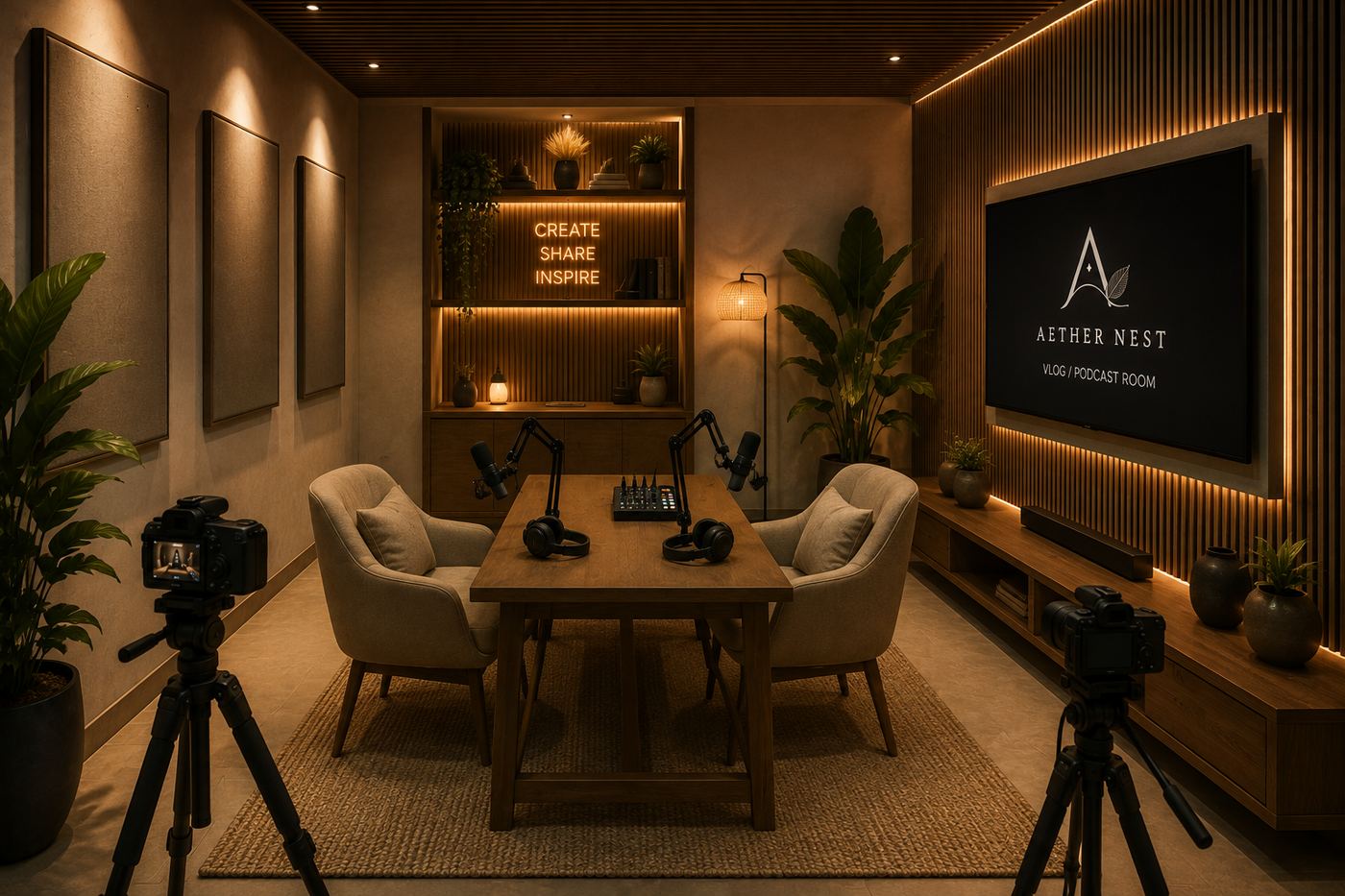
Vlog & Podcast Room
Surroundings
Beyond the lodge, South Lombok
Aether Nest & Aether Den doesn't sit in isolation — it's positioned at the heart of a destination with plenty to offer today, and even more on the way in the years ahead.
Right Now
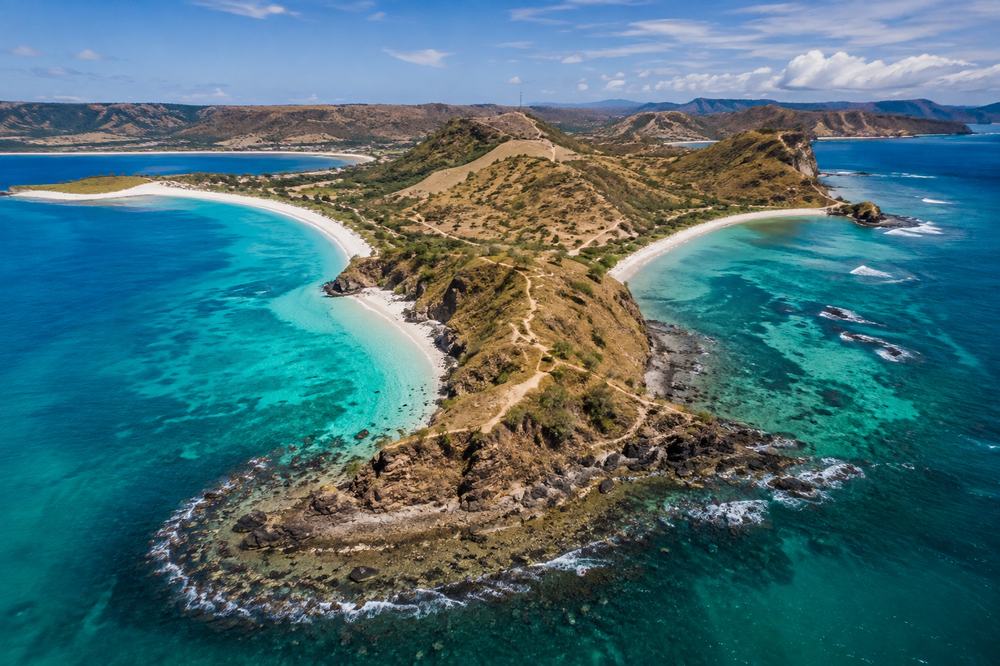
Tanjung Aan
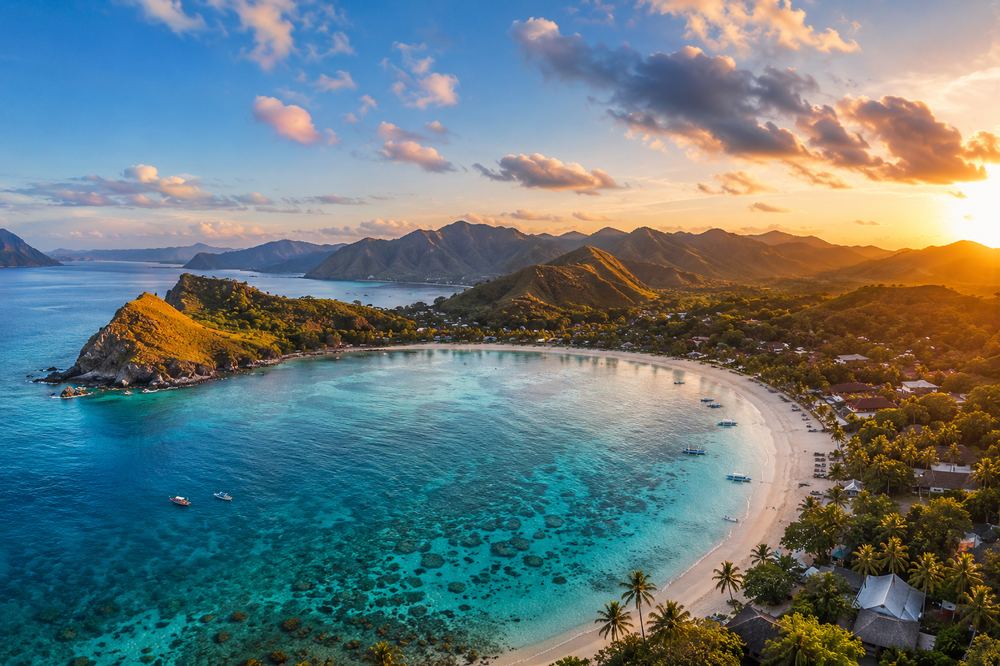
South Lombok's signature bay — white sand, turquoise water, minutes from the lodge.
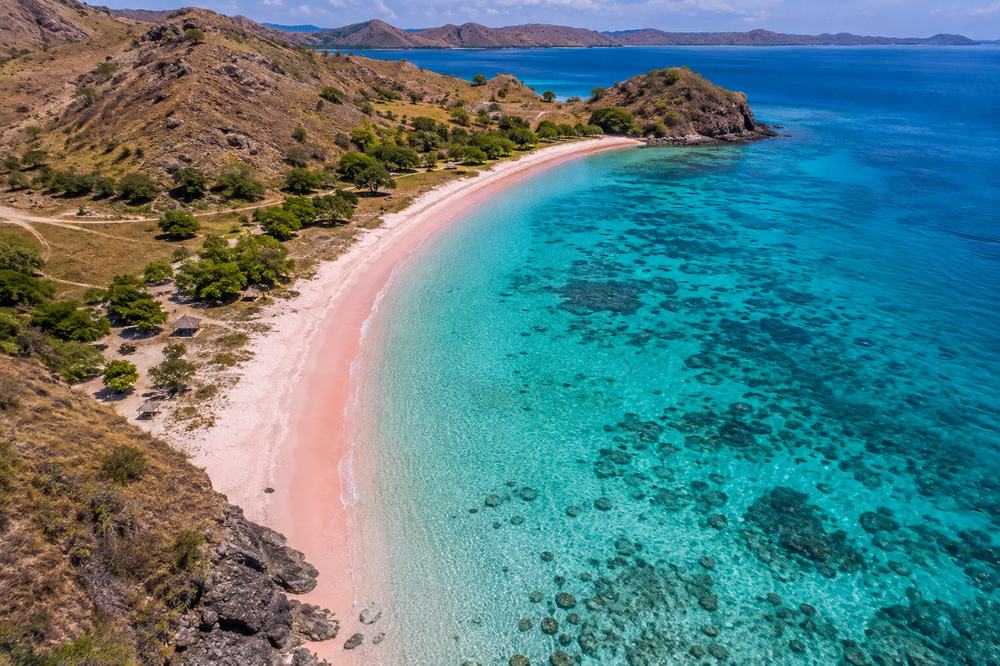
Pink Beach
Rose-tinted sand and coral reef on the Ekas Peninsula — still uncrowded, known mostly to surfers.
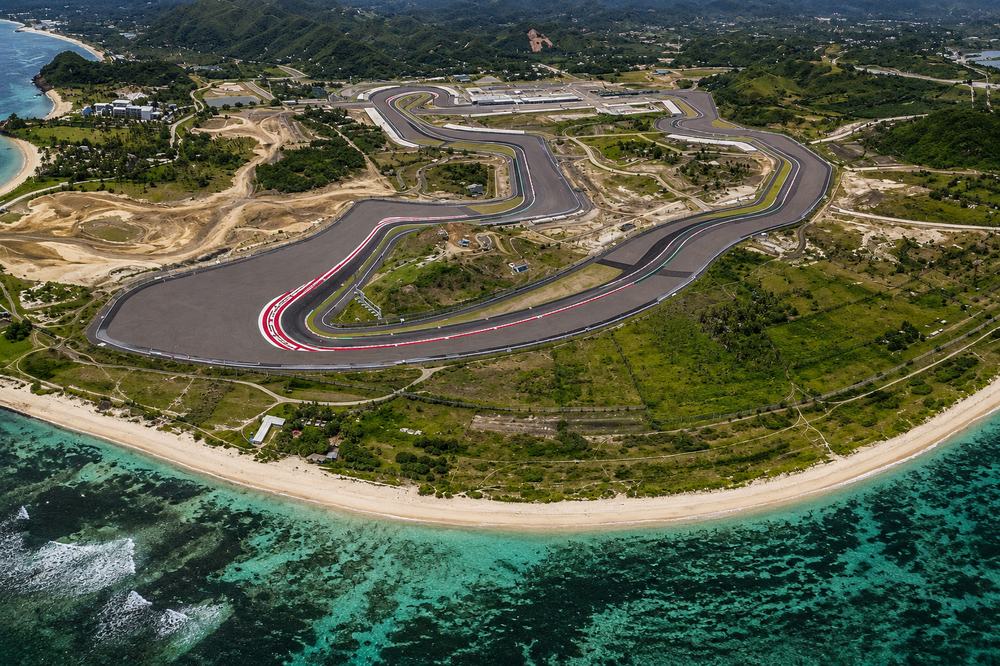
Mandalika Circuit
The Pertamina Mandalika International Circuit hosts MotoGP and other races year-round.
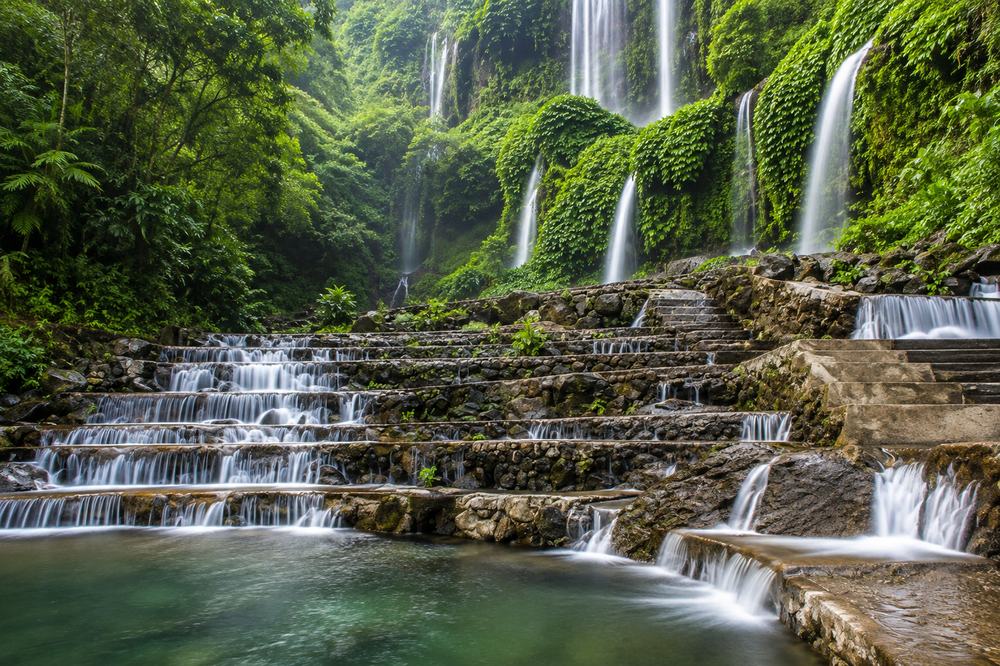
Benang Stokel Waterfall
About an hour's drive, set deep in tropical jungle, reached via traditional villages en route.
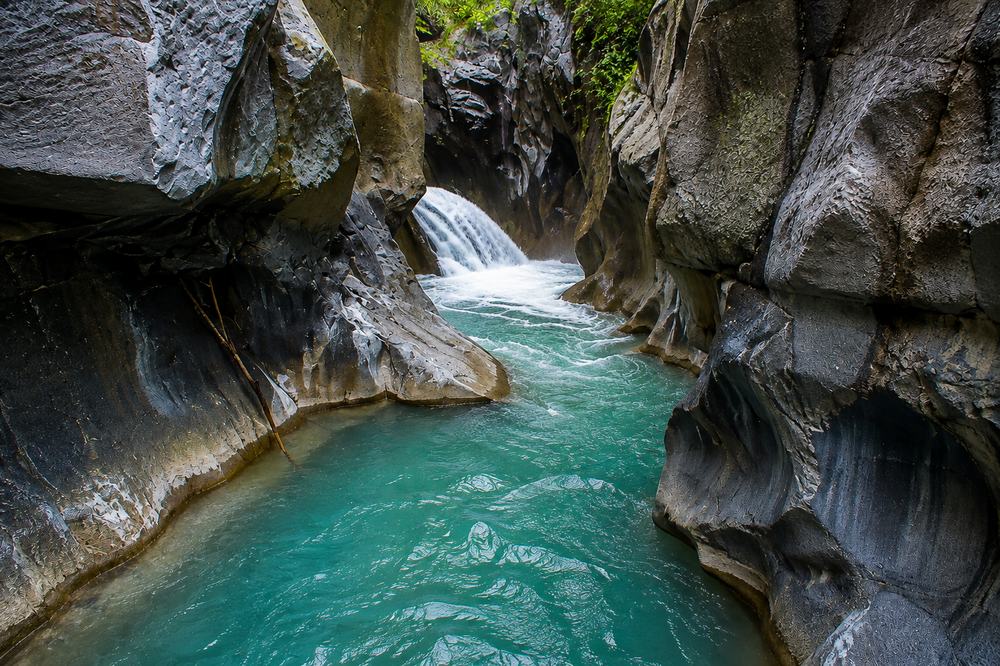
Mangku Sakti Canyon
A volcanic rock canyon and natural pool, for guests keen to hike off the beaten path.
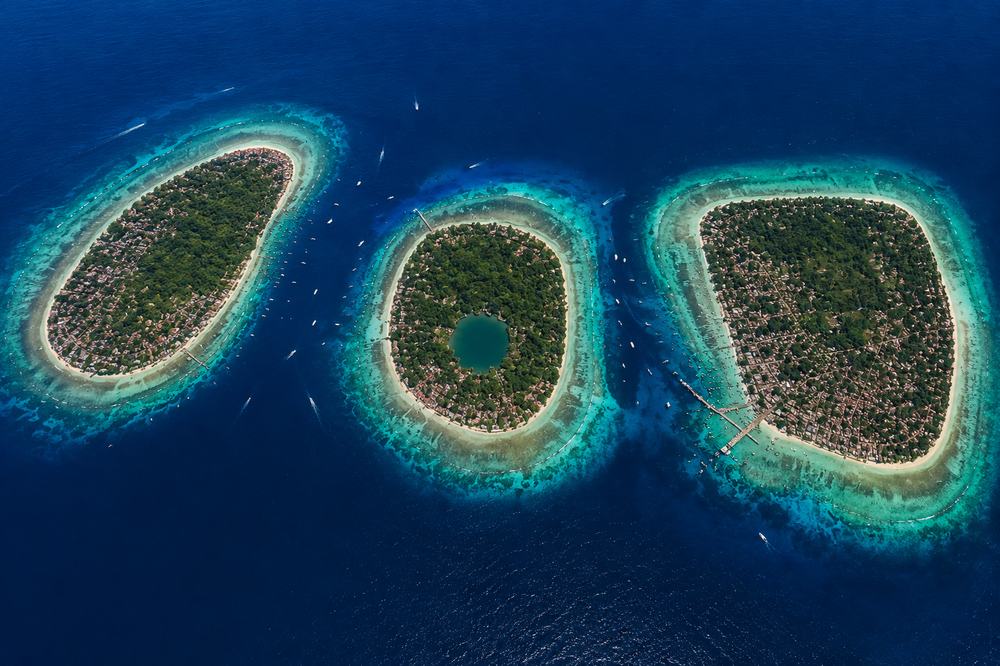
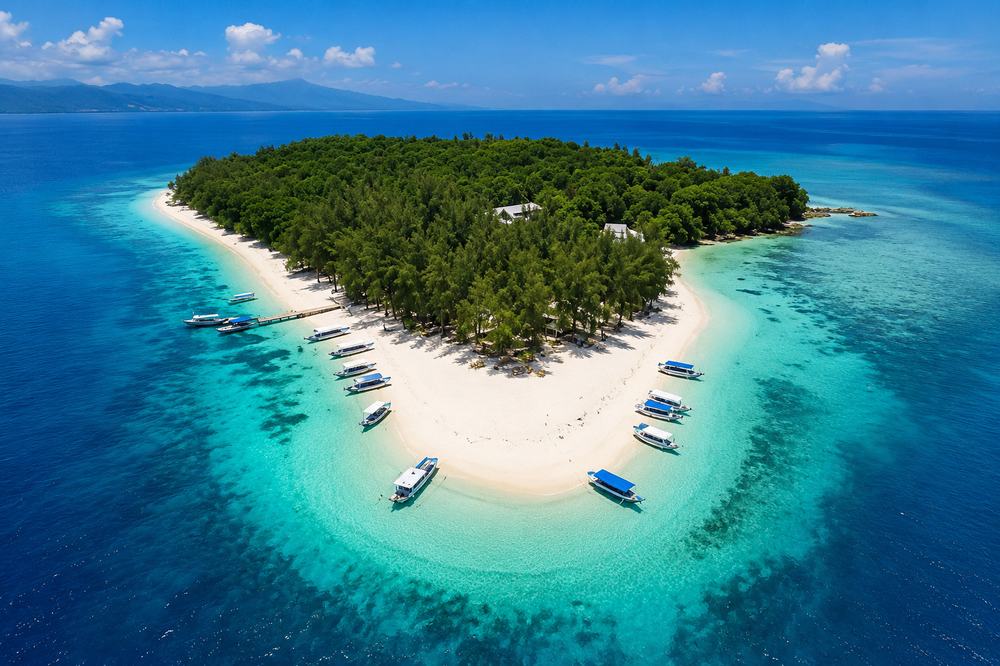
Gili Islands
Day trips to Gili Trawangan, Gili Meno and Gili Air — diving and snorkeling.
A Quieter Gili
Beyond the three main islands, several quieter islets are reachable by private boat trip.
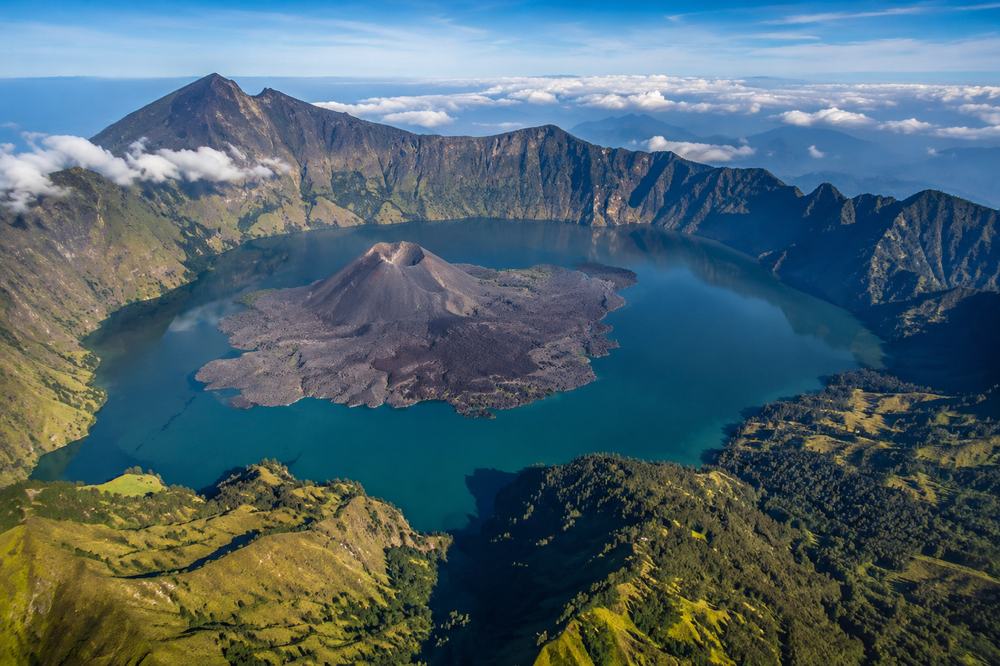
Mount Rinjani
The volcano and its crater lake, to the island's north — for more adventurous trekkers.
In the Years Ahead
Rafa Nadal Academy
The first Rafa Nadal Academy center in Southeast Asia, integrated into the Samara Lombok complex (150 ha) — opening Q1 2028.
Destination by Hyatt
Southeast Asia's first "Destination by Hyatt," within the same Samara Lombok complex — a strong signal of international confidence in the destination.
New Flight Routes
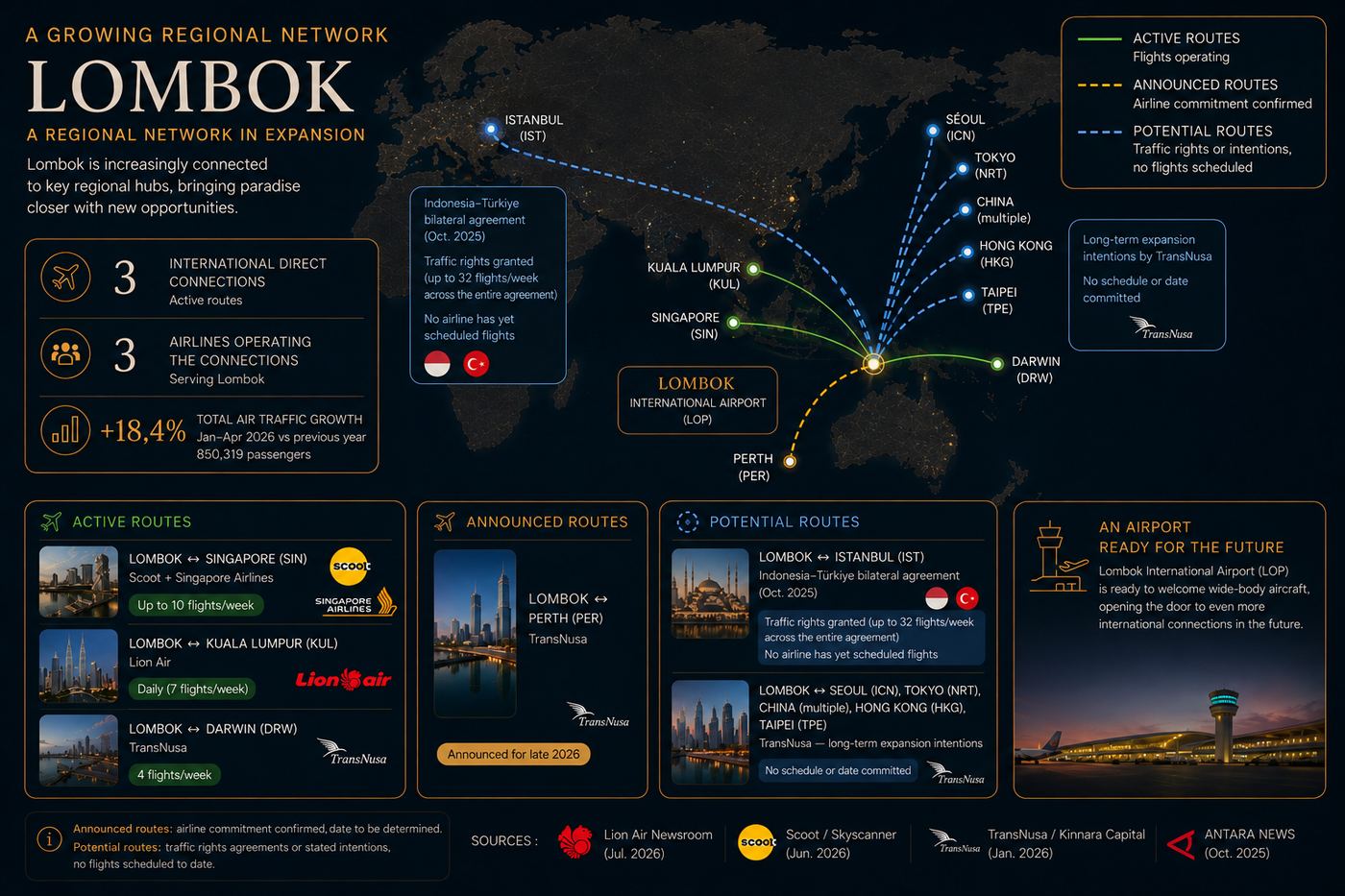
Direct routes already active or announced: Singapore, Kuala Lumpur, Darwin, and Perth later in 2026 — see Market Opportunity for full detail.
A MotoGP Calendar That's Here to Stay
The Indonesian Grand Prix is now an annual fixture on the MotoGP calendar — a repeated international showcase for the destination, year after year.
Sources: WeSeekTravel, The Broke Backpacker, Girl Gone Coconuts (destination guides, 2026); Rafa Nadal Academy, Business Traveller, Invest Indonesia (development announcements — see also Market Opportunity).
Investment Offer
One residence, 12 identical double pods
Aether Nest & Aether Den — Twin Pod Co-Living Residences forms two complementary boutique residences of 12 identical double pods each (~1,050 m² of land per residence, estimate) in South Lombok — a separate investment per residence, with the same unit economics on both sites: a single pod type, a single ADR.
Pod
24 identical units
ADR €35 · identical dimensions and finish across all 12 pods
2 guests per pod
Access to all shared facilities
Resort Capacity
12 pods · 24 residents (12 double pods) max
Reception & welcome area, staff quarters, Swimming Pool, Warung & café, Co-Working Space, Video Conference Room, Vlog & Podcast Room, Gym, Sauna, Yoga Terrace, Mushollah, Laundry, reading nook, outdoor terraces, high-speed fiber Wi-Fi across all shared and private spaces.
Investment Structure
Total investment (land, construction, fees included)
€649,000
Investor equity share
90%
Aetherial Studio equity share
10%
Investment per pod (reference)
~€18,750
Land (~10.5 ares, i.e. ~1,050 m² estimated, at 150M IDR/are), construction of the 14 private double pods, common facilities and professional fees — full detail in Investment Terms.
The same budget, elsewhere
For the price of a 3-bedroom villa in Bali — 300 m² of land, a 30-year lease — this is an entire complex. ~1,050 m² of land (estimate), an HGB land right reaching up to 80 years.
Source: Propertia, April 2026 market study (16,000+ listings) — full detail in Legal Structure.
Performance
Model the return
Aether Nest & Aether Den — Twin Pod Co-Living Residences — 12 identical double pods, total investment €649,000. Revenue calculated directly (ADR × occupancy × 365 nights), costs and margins consistent with the Aetherial Studio model (15% development fee, 14% management fee on net revenue, 90%/10% ratio investor/Aetherial split).
Scenario
Occupancy
Net Revenue
EBITDA
Net Profit
Annual ROI
Payback
Conservative
55%
€151,767
€92,747
€83,472
14%
7.0 years
Target
70%
€193,158
€118,041
€106,237
18%
5.5 years
Optimistic
85%
€234,549
€143,336
€129,002
22%
4.6 years
Gross revenue = 24 guests × €35 ADR × 365 nights × occupancy. Net revenue after direct-booking commission (10%). Total investment: €649,000 (incl. 5% agent commission).
Per-phase durations shown reflect a realistic overlap scenario (see Delivery Timeline in the full report for the complete range and phase-overlap detail).
Request Access
Request the Full Investment Report
The key figures are already on this page. The full report adds the strategic analysis reserved for engaged investors.
Detailed competitive analysis — named competitors and real ADR, by destination
Risk analysis and mitigation plans
Legal structure of the investment
Governance, transparency and reporting
Executive summary and founder's letter
The Full Investment Report
This report is reserved for investors who have received an access code from Aetherial Designs. Use the form above to request one.
Incorrect code. Please check your email or contact us.
Aether Nest & Aether Den — Twin Pod Co-Living Residences is a 12-pod boutique co-living residence, all pods double and identical, developed by Aetherial Designs in South Lombok — a destination selected for its land security and market momentum. Total investment of €649,000 (land, construction, fees included), structured as 90% investor / 10% Aetherial Studio equity, with an annual ROI between 14% and 22% depending on the occupancy scenario (55%-85%), including a 5% agent commission on capital raised.
€649K
Total investment
24
Pods · 24 residents (12 double pods) max
14-22%
Annual ROI (3 scenarios)
4.6-7.0 yrs
Payback period
90%/10% ratio
Investor / Aetherial split
Illustrative budget model pending real construction quotes for the pod format, built on the Aetherial Studio cost model (15% development fee, 14% management fee). To be replaced with a bottom-up quote once vendor bids are received — full detail in Financial Model once available.
This report extends the information already public on the website — there is no duplication. Here you will find named competitive analysis, risk analysis, governance, and legal structure.
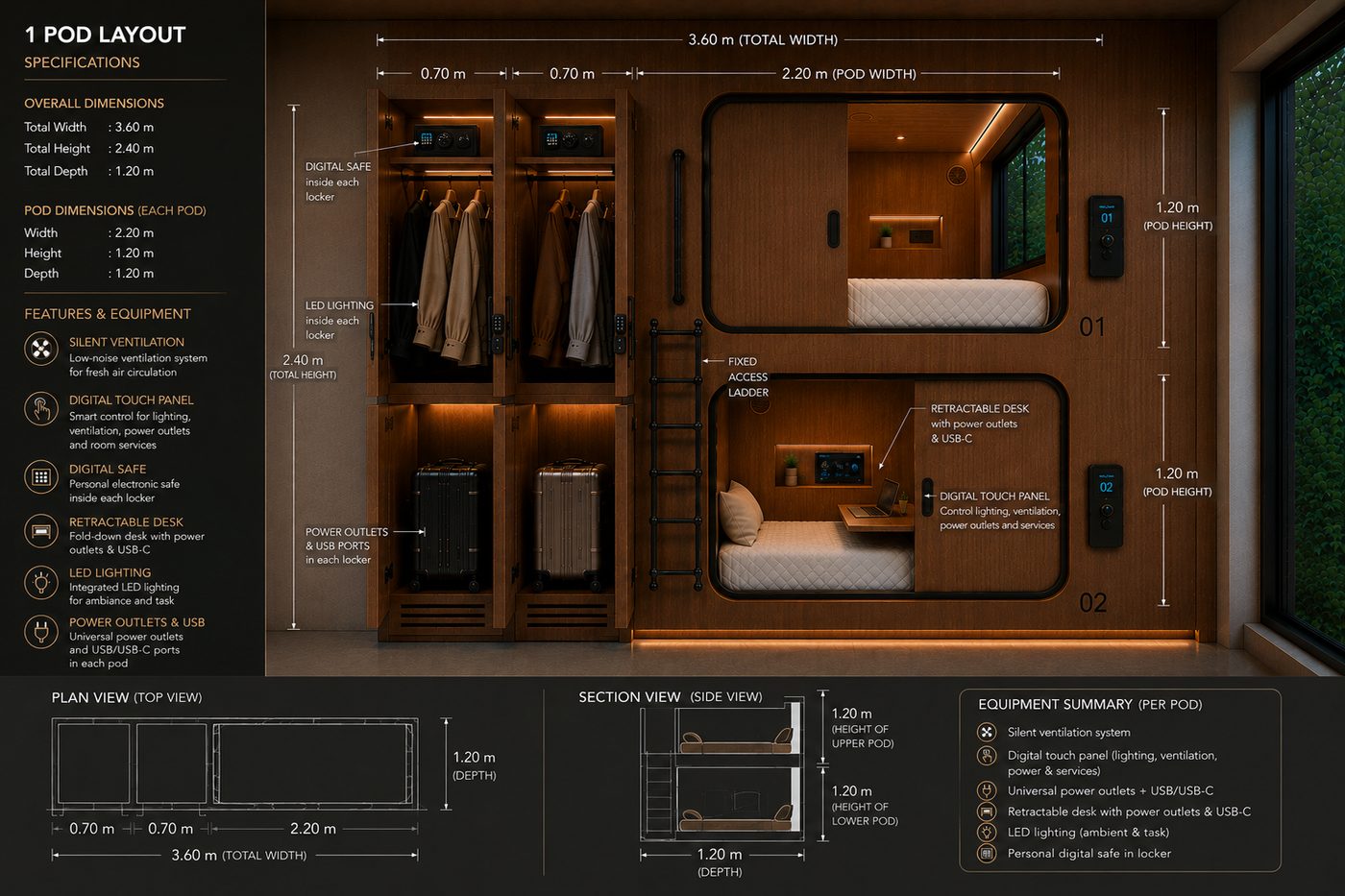
All 12 double pods in the residence are identical — same footprint, same interior and deck surface area, same room arrangement.
Module total width 3.60 m (2 lockers at 0.70 m + 2.20 m pod), total height 2.40 m, depth 1.20 m. Each individual pod: 2.20 m (width) × 1.20 m (interior height) × 1.20 m (depth) — 2 stacked pods (01 top, 02 bottom) per double module, 24 identical units across the residence. Equipment per pod: silent ventilation, digital touch control panel, digital safe inside the locker, retractable desk with power outlet + USB-C, integrated LED lighting, universal outlets + USB/USB-C. Dimensions and equipment confirmed by the selected pod manufacturer.
Engineering & Site Conditions
Building on sand, safely
South Lombok presents a combination of ground conditions that call for a deliberate engineering approach — not an obstacle, but a well-understood, well-solved engineering problem.
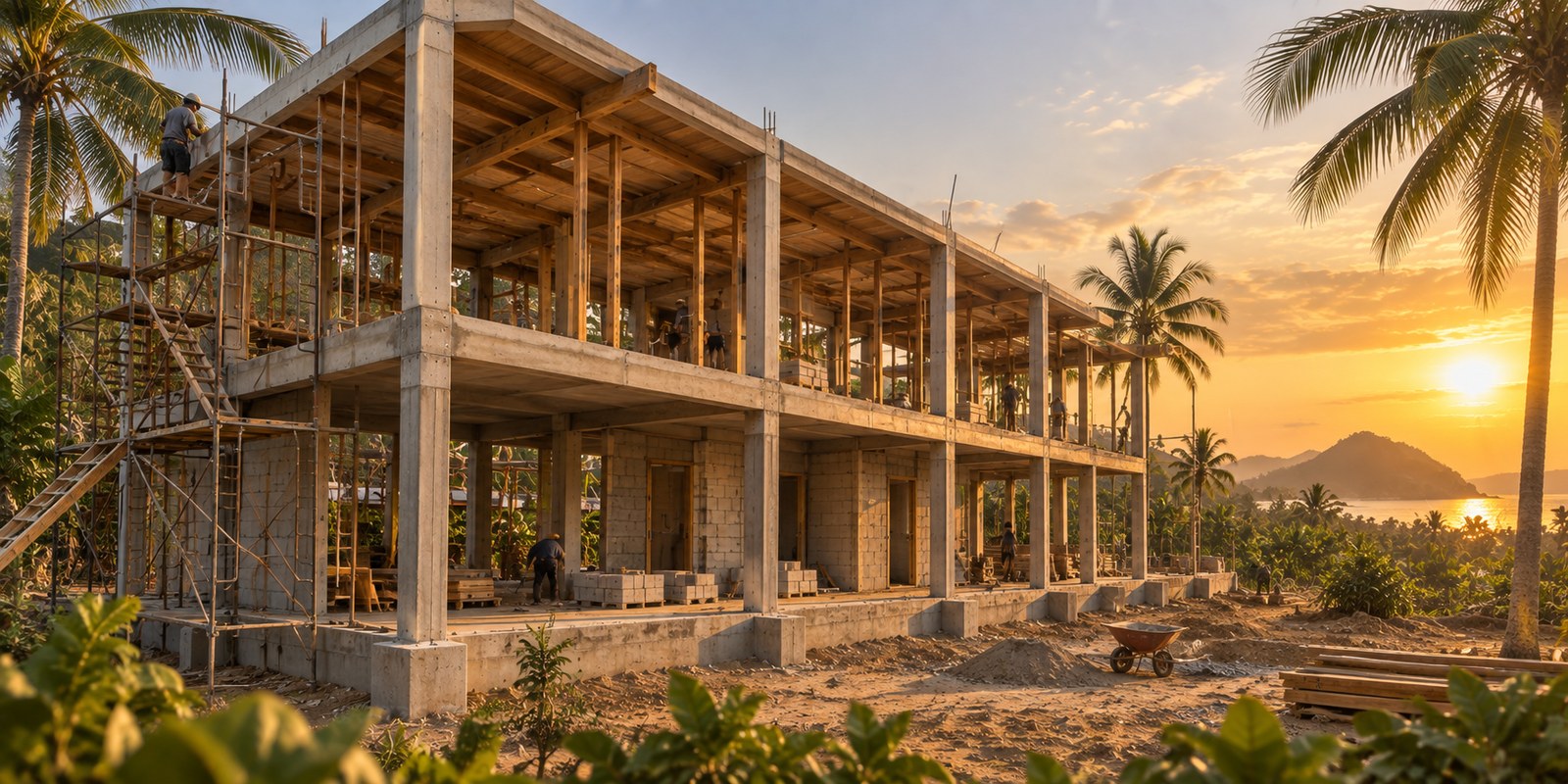
Concept render — building under construction, not site-specific
The site reality
South Lombok's coastal zones, including Mandalika — the region's benchmark development — sit on alluvial plains, often sandy. Excellent drainage, but bearing capacity that must be engineered, not assumed.
The seismic factor
Lombok has recorded 12 destructive earthquakes between 1979 and 2018, including the major July-August 2018 sequence (M6.4 to M7.0). In loose, saturated sandy soil, strong shaking can trigger liquefaction — a temporary loss of soil bearing capacity.
Why a light structure helps
Mass drives seismic force. A lightweight modular pod structure on an engineered raised platform puts less load on the ground than a fully solid concrete building of equivalent footprint — reducing both the risk of triggering liquefaction and the inertial force the structure must absorb. To be validated by a local structural engineer once the building system is finalized.
The foundation approach
Raised timber platforms on point foundations (screw piles or reinforced footings) anchored below the loose surface layer, tied together by a reinforced grade beam to distribute lateral loads — instead of a continuous slab.
To confirm — geotechnical survey
The approach above is the chosen engineering methodology, not yet a final design. A site-specific geotechnical survey (soil boring / SPT test) is standard practice before finalizing foundation depth and spacing, and will be commissioned once the land is secured — see Delivery Timeline, Site Preparation phase.
Wastewater Treatment
The complex will be equipped with a biological septic tank (bio septic tank / biofilter) — not a conventional pit. A fiberglass tank fitted with biomedia houses bacteria that break down wastewater into an odourless, compliant discharge before release — a standard, proven technology for Indonesian hospitality (common brands: Biotech, Biofil, Biotop).
Why it matters here
South Lombok/Mandalika's coastal alluvial plains form a good-quality aquifer, but one that's sensitive to seawater intrusion and contamination. Biological treatment protects that resource instead of simply moving the problem underground.
How it works
Multi-chamber treatment: settling, aerobic/anaerobic bacterial breakdown across biomedia, then clarification — the final discharge can be safely released to local drainage, odour-free.
Complex-wide scale
Centralized or split by pod cluster (to be decided with the architect based on site topography) — sized for 24 residents (12 double pods) guests + staff at maximum occupancy.
Termite Protection
The humid tropical climate gives the region an estimated 70% termite attack potential (Bali reference, comparable climate) — national termite-related economic loss is estimated at IDR 2.8 trillion/year. For a solid-wood construction, this isn't an afterthought — it's its own line item.
Measure
When
Chemical soil barrier under foundations and platforms
Pre-construction
Naturally termite-resistant timber species (teak/jati, merbau/ipil, ironwood/ulin) for structural elements in ground contact
Material selection
Reticulation system (under-slab pipe network, periodically recharged)
Construction
Regular inspections and provider warranty (up to 7 years with established operators)
Ongoing
Fire Safety
Timber and canvas structures, spread across an extended site, with potentially limited fire-truck access — a different risk profile from a solid-build urban hotel, one that needs to be addressed as such rather than copy-pasted from a generic hospitality standard.
Defensive spacing
Sufficient distance between lodges to limit fire spread from one structure to another — already consistent with the 'True Intimacy' positioning in Concept.
Detection & suppression
Smoke detectors per lodge, fire extinguishers in every unit and common area, accessible water point (the pool and on-site water storage can double as a backup reserve).
Access & evacuation
Master-plan footpaths sized to allow rapid evacuation toward the Entrance Gateway; to be validated with local authorities during the SLF application.
Water Supply
The same alluvial-aquifer sensitivity already noted for wastewater applies to water supply: an oversized well can encourage seawater intrusion and salinize the local water table — a documented risk on South Lombok's coastal alluvial plains.
To confirm — hydrogeological study
Well depth and extraction rate need to be sized from a local hydrogeological study, not a generic assumption — with periodic salinity monitoring to catch any early intrusion. To be commissioned alongside the geotechnical survey, once the land is secured.
The Team
A letter from the founder
The world doesn't need more buildings. Every year, thousands of projects are launched around the world. Many will be beautiful. Some will be profitable. Very few will be remembered.
We founded Aetherial Studio because we believe remarkable places are never the result of chance. They are the result of intention. Our role is to discover the ideas worth building, and to surround them with the right partners to bring them to life.
Christian B.
Founder & Creative Director
Ema S.
Commissioner (Komisaris) & Assistant
Sits on the Board of Commissioners (Komisaris) of the project's PT PMA structure — the supervisory and oversight role provided for under Indonesian corporate law, distinct from day-to-day management (Direksi). Also supports the project in an assistant capacity.
Raka F.
Project Supervisor
On-the-ground project supervision in South Lombok — coordination between the architecture firm, contractors and local teams.
External Partners
Architecture
Walawastu
Construction
Arsa Karya (+ 1 partner contractor)
Accounting
Independent accountant
Legal
External legal counsel
Handled In-House
Marketing
In-house team
Resort Operations Management
Once operational, a dedicated management team runs the resort day to day — this is what makes the investment passive for shareholders.
Property Marketing
Positioning, content and promotion of the resort to drive demand both directly and through distribution channels.
OTA Distribution via Channel Manager
Listings and availability across OTAs (Booking.com, Airbnb, etc.) managed via a channel manager (Guesty), keeping rates and calendars in sync across every channel without overbooking.
Staff Management
Recruitment, scheduling and supervision of on-site staff (front desk, housekeeping, maintenance, security).
Expense Management
Tracking of day-to-day operating costs, feeding into the monthly reporting shared with investors (see Governance).
Distribution Strategy — From OTA to Direct
The split between OTA and direct bookings shifts in two phases, to maximize first fill speed, then margin.
Phase 1 — Launch
OTAs (Booking.com, Airbnb) via the Guesty channel manager, to immediately tap into their existing traffic and reviews — essential for a brand-new resort with no direct brand awareness or guest base yet.
Phase 2 — Once established
Gradual shift toward direct booking (the resort's own site, repeat guests, word of mouth) as reviews, brand awareness and SEO build up.
Why it matters
OTAs typically charge a 15-20% commission per booking. Every direct booking removes that cost — a margin lever that builds progressively, on top of what the base financial model assumes.
The financial model presented in this report (see Financial Model) uses a constant blended net ADR and does not explicitly model this OTA/direct shift — the ramp-up in direct bookings represents additional margin potential, not guaranteed and not yet quantified in the published scenarios.
Revenue Optimization — Packages & Upselling
Beyond the base ADR, packages already designed and ready to operate increase average spend per stay without depending on higher occupancy.
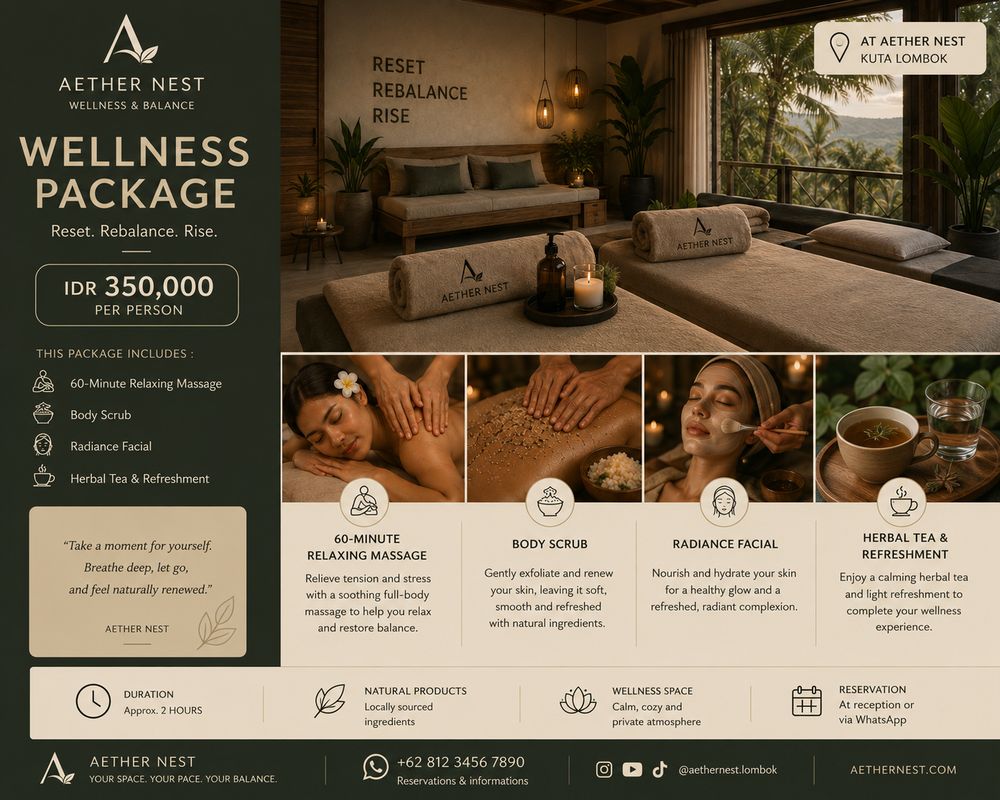
Wellness Package
350 000 IDR per person (~€17)
60-minute relaxing massage, body scrub, radiance facial, herbal tea and refreshment — approximately 2 hours, locally sourced ingredients, in the dedicated wellness space.
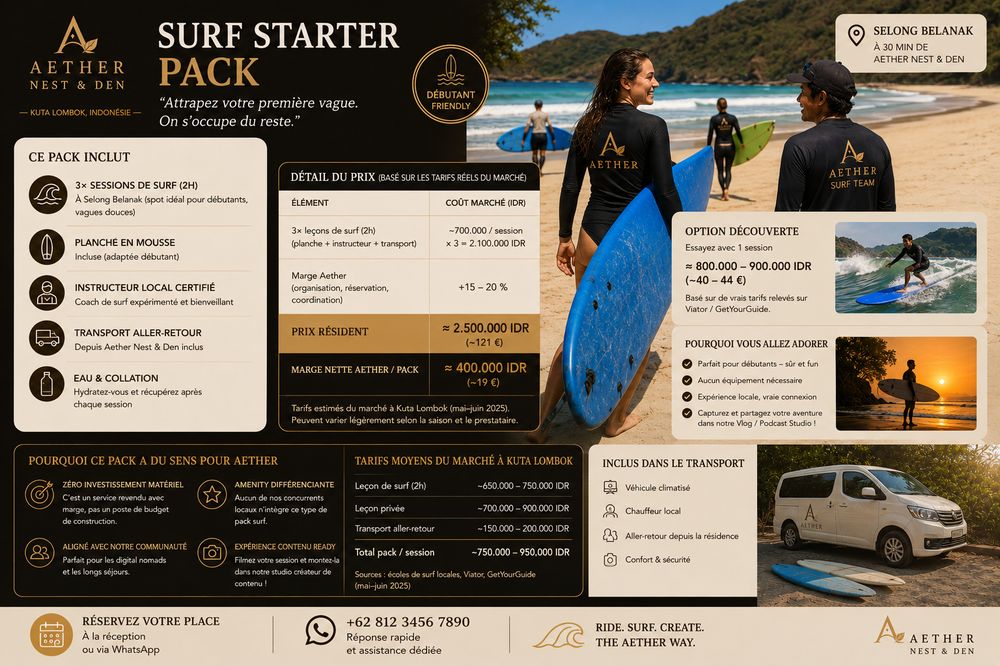
Surf Starter Package
2 500 000 IDR (~€121)
3 surf sessions (2h each) at Selong Belanak (beginner-friendly, 30 min away), soft-top board included, certified local instructor, round-trip transport and snack — zero equipment investment, resold with margin.
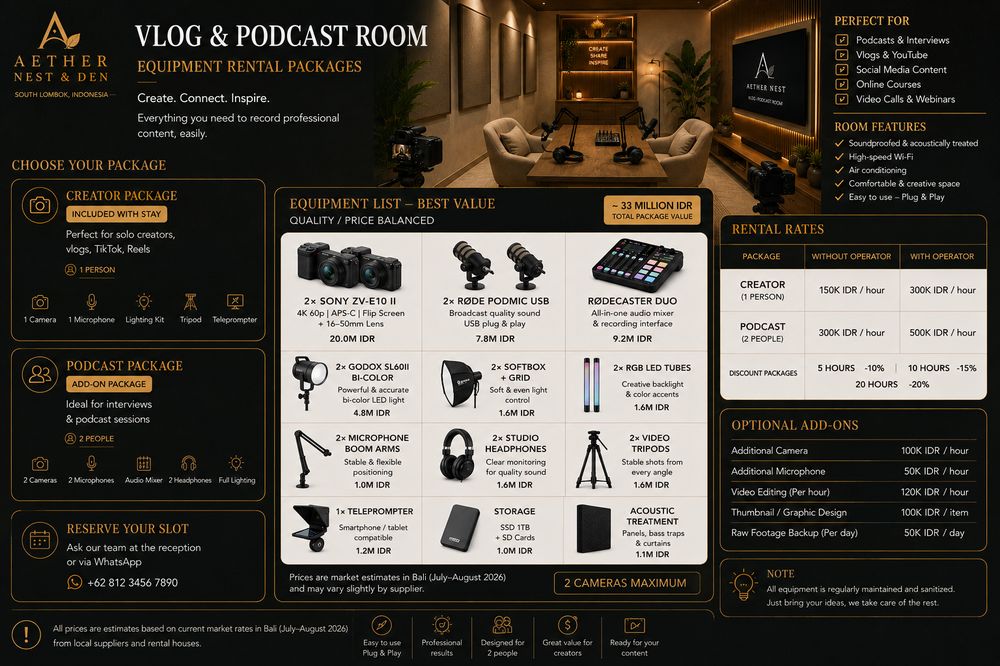
Vlog & Podcast Room Rental
Included with stay (1p) · from 300K IDR/hr (2p)
Sony ZV-E10 II dual-camera setup, RØDE mics, professional lighting and RØDECaster Duo (~33M IDR total equipment value) — Creator Package included with stay, Podcast Package as an hourly add-on, with or without an operator.
Like the OTA/direct shift above, this lever is not quantified in the published ADR scenarios (see Financial Model) — to be built into the model once packages are tested in real operation, rather than assumed ahead of opening. Package prices in IDR, indicative exchange rate 20,650 IDR/EUR (see Annex A14).
Team structure
In-house team: the founder (Christian B.), Commissioner Ema S. (Komisaris), project supervisor Raka F. based in South Lombok, and marketing. Architecture (Walawastu), construction (Arsa Karya + 1 contractor), accounting and legal are handled by external partners — a deliberately lean structure, consistent with the 'independent professionals' approach detailed under Governance. Once the resort opens, operations management (marketing, OTAs via Guesty, staff, expenses) takes over from the project team. The second contractor's name and legal counsel to be shared once mandates are formalized.
Macro Analysis
A market gaining momentum
Beyond South Lombok's own positioning, several underlying trends support the investment thesis at a broader level.
South Lombok, Indonesia
Indonesian tourism growing strongly
15.39 million foreign visitors in 2025 (exceeding the government's 14-15M target), up ~10-14% year-on-year toward year-end. Q1 2026 confirms the trend with 3.44M arrivals (+8.62% YoY), the strongest first quarter since 2020.
Rising tourist spend
Average spend per foreign visitor reached $1,267 in 2025, above the government's own target ($1,220). Domestic trips reached 1.20 billion in 2025 (+17.55%).
The Indonesian glamping market is taking off
Estimated at $43.2M in 2024, projected to reach $138.67M by 2033 (12.37% CAGR) per IMARC Group. The global glamping market follows the same trajectory: $3.8-4.2 billion in 2025-2026, toward $7.9 billion by 2033 (~9.5% CAGR) per Grand View Research.
The "10 New Balis" program validates the destination strategy
Indonesia's national tourism strategy actively pushes flows toward emerging destinations beyond Bali — including Lombok, Aether Nest & Aether Den's chosen destination. This is not a coincidence: it's a direct alignment with government policy.
Major hotel groups are validating the asset class
Marriott (Postcard Cabins acquisition, Dec 2024), Hyatt (Under Canvas alliance, Jul 2024) and Hilton (AutoCamp partnership, Feb 2024) all entered the glamping/cabin segment within the past 18 months — a sign this is no longer a niche, but an asset class taken seriously by institutional hospitality.
Tourism investment surging
Realized investment in the Indonesian tourism sector reached Rp73.55 trillion (~$4.38B) in 2025, up 56.05% year-on-year — a strong signal of investor confidence in the broader sector.
Sources: BPS (Statistics Indonesia) / Trading Economics (tourist arrivals, Q1 2026); Indonesian Ministry of Tourism via ANTARA News (2025 results, sector investment); IMARC Group (Indonesian glamping market, 2024-2033); Grand View Research (global glamping market, 2025-2033); public announcements from Marriott/Hyatt/Hilton (2024). Data accessed July 2026.
The Mandalika SEZ Master Plan
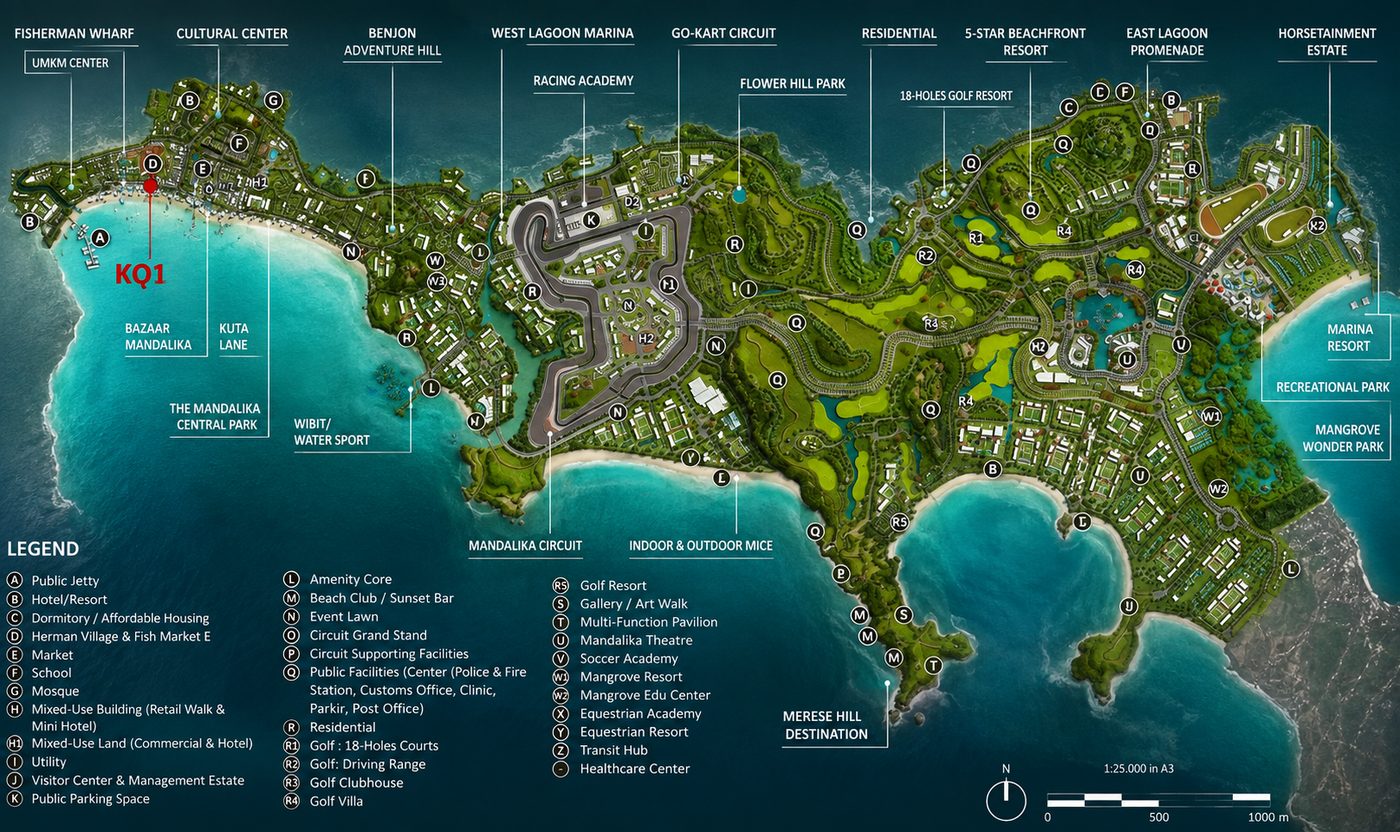
An overview of the full Special Economic Zone — 18-hole golf, Mandalika Circuit, marina, residential districts, 5-star hotels, and public infrastructure planned across the whole peninsula. The KQ1 marker shows an indicative reference point within the project's target corridor — the final land parcel has not yet been secured (see 5-Year Outlook for detail on the target zone).
Official Mandalika SEZ master plan, scale 1:25,000 (A3 format) — KQ1 marker added to show Aether Nest & Aether Den's position. Source: ITDC / Mandalika master plan.
Lombok by the numbers
Lombok's tourism statistics vary significantly by source, because they don't measure the same scope — the entire NTB province or Lombok island alone, all visitors or international only, all entry points or the airport alone. The table below states the scope of each figure explicitly rather than aggregating them misleadingly.
Period
Metric
Scope
2019 (pre-Covid)
~1M visitors, +20%/yr
Lombok, all visitors
August 2024
12,161 arrivals/month
International, by air only
April 2025
+43.58% vs March 2025
International arrivals, airport
Jan-Apr 2025
+88.93% cumulative (North Lombok)
Domestic visits, specific zone
2025 (full year)
61,618 visitors
International, airport only
2025 (full year)
1.2M star-hotel guests
All visitors (domestic-dominant)
Jan-Apr 2026
+18.4% total traffic, 850,319 passengers
Airport, all flights
Nationalities of international arrivals (2025, airport)
Asia-Pacific
57% of total international arrivals — clear regional dominance, driven by direct flights and cultural proximity.
Malaysia — leading source
17,131 visitors in 2025, well ahead of all other nationalities.
Singapore & China
5,019 Singaporean and 4,882 Chinese visitors in 2025 — second and third largest sources.
Secondary flows
Japan, South Korea and India contribute smaller but steady flows. In April 2025, Europeans (3,100) and ASEAN travelers (2,811) led that specific month — composition varies by season.
Data gap
No official Lombok-specific projection (3-5 year horizon) was found — only a national Indonesian target exists (14.6-16M international visitors for 2025, see above). Any medium-term Lombok projection presented elsewhere in this report remains an extrapolation, not an official figure.
Sources: BPS Statistics Indonesia NTB (air arrivals, August 2024, transport); Lombok Dispatch trade press (2025 results, nationality breakdown); Discover Lombok Guide (April 2025, domestic growth). Data accessed August 2026 — the exact scope of each figure is stated in the table above.
The Aetherial Method
We validate before we build
Concept render — not site-specific
Most real estate projects start with land, a budget, an architect — and only after construction does the market judge whether the idea was good. Aetherial Studio inverts this model: from hope to certainty, from speculation to validation. By the time an investment reaches our partners, the concept has already been challenged, validated, designed, modelled and prepared for execution.
Competitive Analysis
Where Aether Nest & Aether Den stands
South Lombok has been benchmarked against its direct competitors — Kuta Lombok private-room hostels and rental villas — to validate Aether Nest & Aether Den's pricing position before any commitment. Rates individually verified in August 2026 against official websites and booking platforms (Booking.com, Hostelworld, Hostelz.com).
South Lombok
Strong growthSouth Lombok
Pipes Hostel (private room)
280-350K
Ka Niu Lombok Hostel (private room)
280-320K
Kuta Lombok private villas
700-1200K
Aether Nest & Aether Den (per double pod, all-inclusive)
553-711K
Opportunity: one of Indonesia's fastest-growing tourism destinations, with ongoing infrastructure investment and virtually no structured co-living supply yet (the local market remains dominated by traditional surf hostels). Advantages: a distinctive landscape (surf coast), near-absence of direct competition on the pod/co-living format. Disadvantages: a price gap (roughly 2x a hostel private room) to justify through experience (pool, co-working, sauna, organized community); a still-developing long-stay demand base in this specific area.
Market Data — Lombok
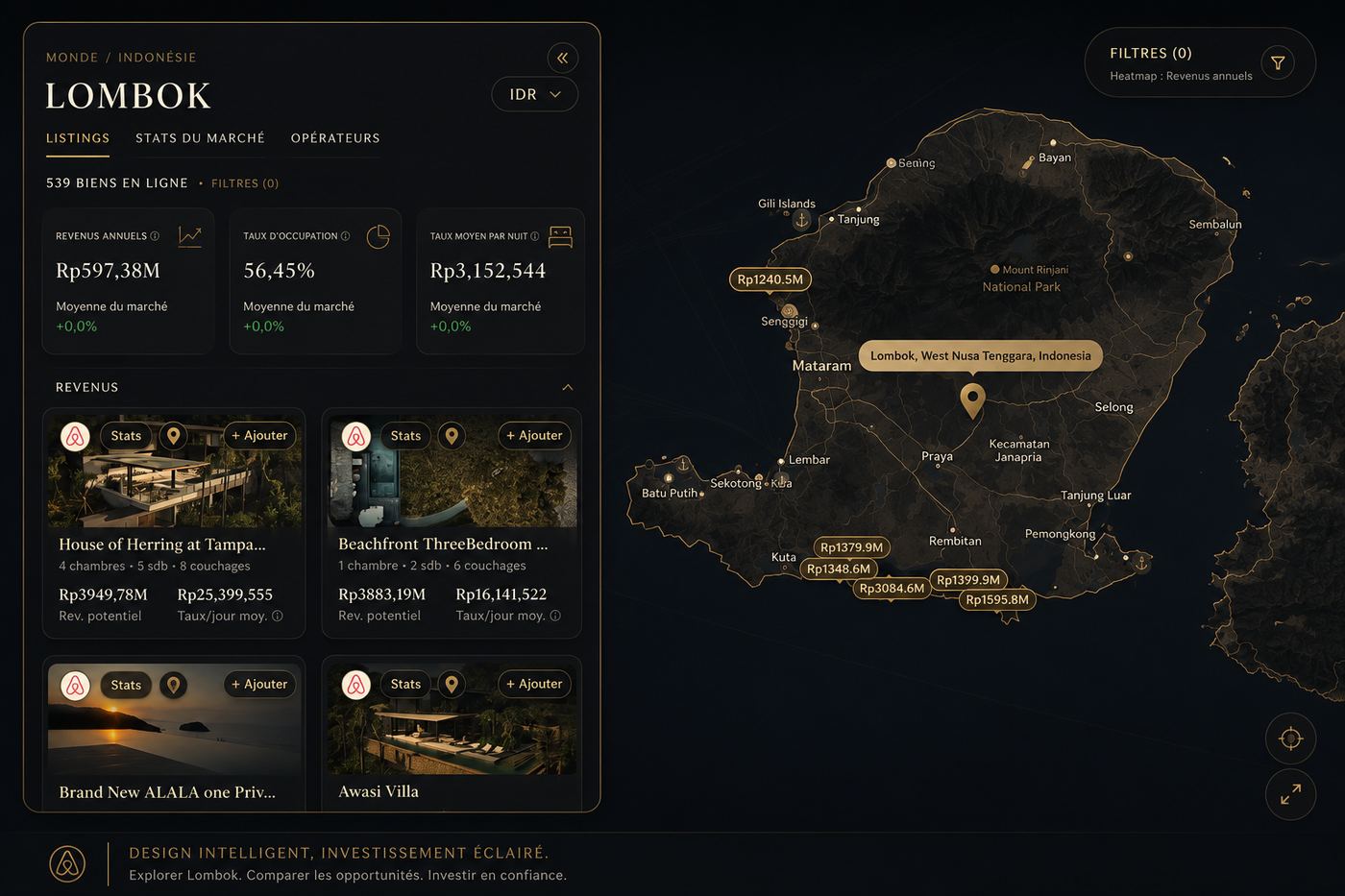
539 listings tracked
Avg. Annual Revenue
Rp 597.38M
Avg. Occupancy Rate
56.45%
Avg. Daily Rate
Rp 3,152,544
Island-wide Lombok market averages across all listing categories (geolocated data) — Aether Nest & Aether Den's own ADR (see table alongside) is deliberately positioned above this average, consistent with a premium rather than market-average play.
Source: AirDNA, data accessed August 2026 — see Annex A2 for full detail by zone.
ADR in IDR/night (K = thousands). Base rates individually verified in July 2026 (Booking.com, Tripadvisor, HotelsCombined, official sites) — fluctuate by season, room type and availability. Do not replace a formal market study.
Regional landscape — Indonesia & Southeast Asia
Widened beyond South Lombok: Aether Nest & Aether Den's positioning against comparable co-livings and pod formats across Indonesia and the region.
Destination
Property
Rate/night (USD)
Positioning
South Lombok (Indonesia)
Aether Nest & Aether Den — per guest
~$35
Target positioning
Canggu, Bali (Indonesia)
Established co-livings (Outpost, Tribal, Shashavata) — average
~$31-40
Digital-nomad co-living
Ubud, Bali (Indonesia)
Outpost Ubud (monthly live+work package)
~$34
Digital-nomad co-living
Indonesia — national
Bobobox / Bobopod
~$10-15
Budget/transit urban pod
Aether Nest & Aether Den position themselves below traditional South Lombok boutique resorts (\$75-139/night) by design — the co-living pod format targets a different buyer (long-stay digital nomads, solo travelers) at \$35-45/pod/night, undercutting private-room hostels while offering hotel-grade shared amenities (pool, co-working, sauna, yoga terrace) that budget hostels don't provide.
Indicative rates, verified August 2026 (Booking.com, Tripadvisor, official property and co-living sites). USD converted from IDR at prevailing rates (~15,800 IDR/USD) where needed. Sample deliberately restricted to comparable properties (co-living / hostels / villas) — does not replace a formal market study.
Direct Competition for Investment Capital
Beyond nightly-rate competition, one competing project directly targets the same investor pool in Kuta Lombok — worth knowing before any commitment.
The Green Hub (Kuta Lombok)
A competing co-living/coworking project currently fundraising in Kuta Lombok — over 1,500 m² of purpose-built space, in the heart of Kuta Mandalika. Publicly stated projected ROI of 22%. Founded by a co-founder of Guru café (Kuta Lombok) and a tech/finance profile. Development status not independently verified by us — public information from the project's own site, to be cross-checked.
Source: project's official site (thegreenhublombok.com), accessed August 2026. The stated ROI is the project sponsor's own projection, unaudited.
Competition on the Pod Format
Beyond South Lombok, is the pod format itself already contested across Indonesia and Southeast Asia? Two relevant benchmarks.
Bobobox / Bobopod (Indonesia)
A national pod chain founded in 2018 (Bandung) — $21.3M raised (Alpha JWC Ventures, Kakao Investment, Emtek). Over 1,500 rooms across 37+ locations in Indonesia, profitable, >75% occupancy. Double-bed pods, app-controlled. Rate: $10-15/night — an urban transit/budget format, without a wellness or long-stay community positioning. Extended range via Bobocabin (nature glamping) and Boboliving (co-living).
Source: Dealroom.co, CB Insights, The Jakarta Post, official site bobobox.com, accessed August 2026.
Pod Hotels — Singapore
The pod format is well established in Singapore (CUBE Boutique Capsule Hotel, The Pod @ Beach Road, Atlantis Pods, among others) — evidence the concept is validated at a regional scale. But positioning is almost exclusively urban transit/budget (airport proximity, dense tourist districts), with no wellness or long-stay community equivalent.
Source: Travelocity, booking aggregators, accessed August 2026.
Takeaway: the pod format is validated at scale across Indonesia and Southeast Asia (Bobobox, Singapore pods), but no identified competitor combines this format with a wellness and long-stay community positioning — the angle Aether Nest & Aether Den occupies.
Why now
South Lombok is seeing concrete acceleration — not a marketing promise. Three signals verified in July-August 2026:
Air access opening up
Active direct routes already: Singapore (up to 10 flights/week, Scoot + Singapore Airlines), Kuala Lumpur (daily, Lion Air, since July 2026), Darwin (4 flights/week, TransNusa — the first-ever direct Australia-Lombok route). Lombok-Perth announced for later in 2026.
Rafa Nadal Tennis Center
Announced 30 July 2026: the first Rafa Nadal Academy center in Southeast Asia, integrated into the Samara Lombok complex (150 ha, south coast, 25 min from the airport) — the first "Destination by Hyatt" in Southeast Asia, opening Q1 2028.
Mandalika SEZ investment
Government-backed Special Economic Zone (ITDC): IDR 6,018 billion (~$354M) invested as of end-2025, with 27 domestic and international companies active (Singapore, Japan, Spain, US, Morocco). Lombok airport traffic up 18.4% between January and April 2026.
Marina Bay City
A 149-hectare coastal development at Buwun Mas (40 min from Mandalika): marina, villas, an international convention centre (construction started in 2026, up to 2,500 delegates at full capacity).
Sources: Lion Air Newsroom, Scoot/Skyscanner, Rafa Nadal Academy, Business Traveller, Invest Indonesia, Marina Bay City — accessed August 2026.
Part 2
The Offer
Investment Terms
One single investment
Illustrative all-inclusive price: 12 identical double pod units, ancillary structures, permits, furnishing, land (~1,050 m² estimated), land tax, notary and contingency. This figure is a placeholder pending real construction quotes for the pod format — to be replaced with a bottom-up costed model. Full detail to be added to the Excel model once available.
Level
All-inclusive price
Lodge composition
Guests
ADR (weighted avg)
Land
Infinite
€649,000
12 identical double pods per residence
24
€35
~1,050 m² (estimate)
Methodology
Illustrative estimate, not yet backed by a full bottom-up model: pod unit cost, ancillary structures, land, land tax (10%), notary (2%), contingency (10%), and Aetherial Studio margin (15%, confirmed rate, covering project creation and supervision) are all placeholders pending real construction quotes for the pod format. To be replaced with a full line-by-line Excel model once vendor bids are received.
Capital calls tied to milestones, not dates
Each payment is triggered by a verifiable project milestone — not a calendar deadline. The investor only pays against a demonstrable stage of progress, spread across the project's 18 months (estimate).
Installment
Milestone
Indicative timing
Share
Reservation Deposit
LOI / Reservation Agreement signed
Month 0
10%
Land Acquisition & Development Stage
Land acquisition completed (HGB under PT PMA) + Master Plan & Architecture approved
Month 3
35%
Construction Commencement
Building Permit obtained & Construction Commencement
Month 6-7
20%
Structural Completion
50% Construction Progress
Month 11-12
20%
Substantial Completion
Substantial Completion (≈90%)
Month 15-16
10%
Final Completion & Operational Handover
Final Handover & Operational Readiness
Month 18
5%
The final 5% is a holdback, released only on delivery of an operational project — not a mere delivery date. Timing is indicative, aligned with the Delivery Timeline (18 months (estimate) total); each payment's actual trigger remains the milestone reached, not the month shown.
Use of Funds
Where the capital goes
The total entry amount of €649,000 (see Investment Terms) covers the following cost components, calculated from the full bottom-up model (see Excel model and BOQ for the full line-by-line detail).
Construction (pod units, interior, furnishing, shared amenities)
34.4%
Land, land tax, notary
29.7%
Aetherial Studio margin (creation + supervision)
15.4%
Contingency + contractor margin
8.9%
Permits, drawings, BOQ, water permit
6.2%
General services / site prep
5.2%
Construction & fit-out
Pod unit, shared bathrooms, furniture, included amenities (pool access, deck, etc.) according to the chosen tier.
Permits & compliance
PBG, SLF, local authority filings, notary fees tied to the PT PMA structure.
Recruitment, OTA listing, soft launch, and a cash reserve for the first months of operation.
Provided — level-by-level detail in Excel
Detailed line-by-line breakdown available in the full Excel model (Cost_Infinite tab). Land is now included in these amounts (see Investment Terms).
Delivery Timeline
From acquisition to revenue
Phase-by-phase detail, as referenced on the main page — not a contractual supplier schedule.
Acquisition
Permits
Site Prep
Construction
Pre-opening
Total
2-3 mo
3-5 mo
2-3 mo
6-8 mo
2-3 mo
18 months (estimate)
18 months (estimate) sits between the sequential sum of each phase's minimum (15 months, with zero overlap) and its maximum (22 months) — a realistic scenario using phase durations close to the midpoint of each range, with light overlap (permits initiated before acquisition fully closes, pre-opening beginning during the final weeks of construction). A more cautious schedule, with longer permit processing, little to no overlap, or weather/construction delays, can push the total to around 22-24 months.
Financial Model
The numbers, year by year
Year-by-year detail (cumulative net profit, 5-year ROI) for all three scenarios lives in the downloadable Excel model below — the Performance table on the main page and above already gives the Conservative/Target/Optimistic view at a glance.
Final methodology
Model based on a real supplier quote for the pods (see BOQ). A single $35/guest ADR, applied uniformly (identical pods), benchmarked against comparable co-living and capsule-hostel pricing across Lombok and Bali ($10-130/night depending on format and finish) rather than the boutique-villa market. Occupancy assumptions reflect longer average stays typical of co-living residences versus short-stay resorts. Three occupancy scenarios: Conservative 55%, Target 70%, Optimistic 85%.
Provided — Excel model
Full financial model available for download — editable assumptions, 3 scenarios, 5-year projection, exit valuation calculator. The detailed P&L (operating costs, depreciation, local taxation) is broken out line by line; precise local taxation still needs validation with the project's financial controller and tax advisor.
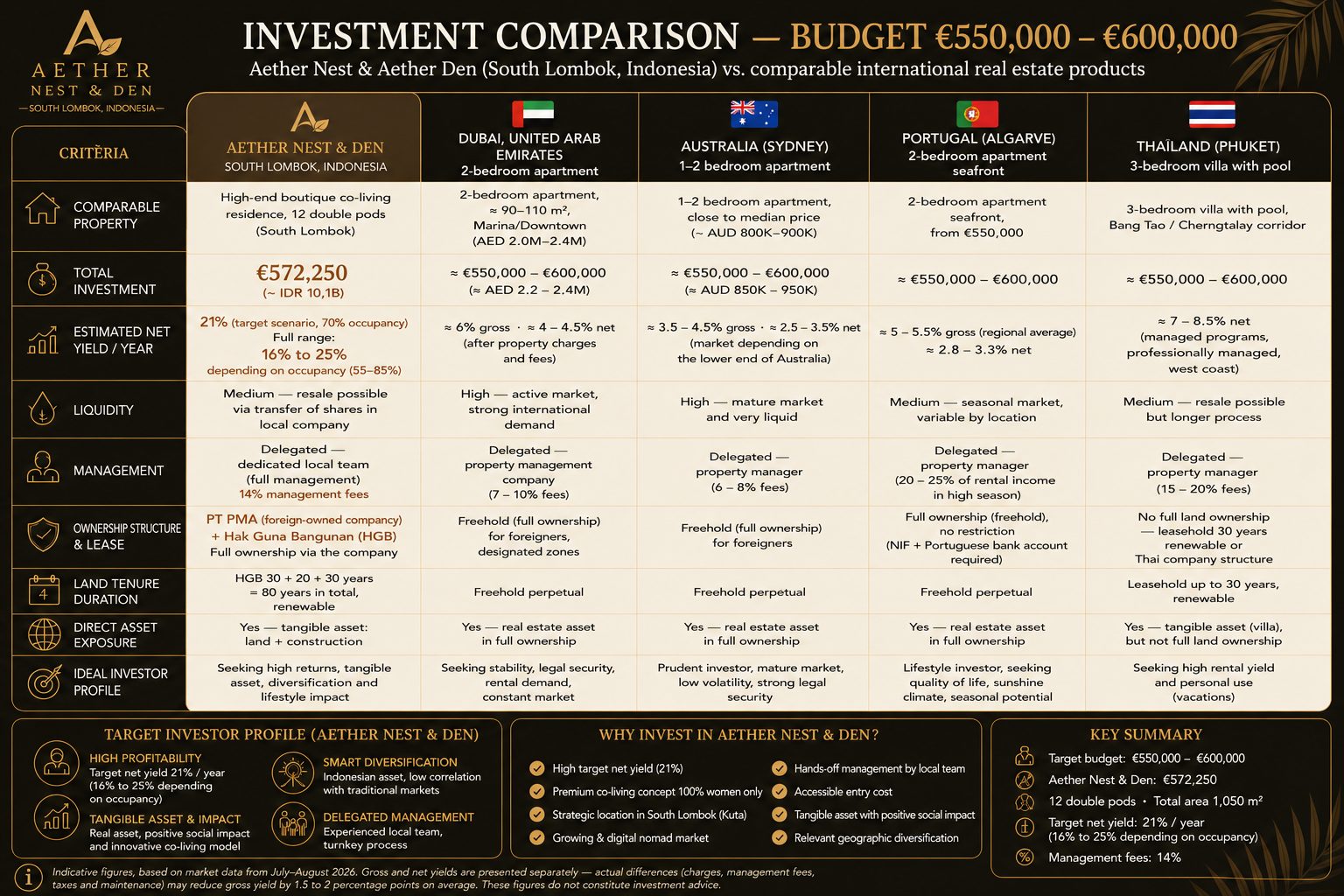
As a concrete point of reference: here is what a €500,000-550,000 budget buys in four other real estate markets popular with international investors, compared with a 90% equity share in the entire Aether Nest & Aether Den — Twin Pod Co-Living Residences resort (€649,000, South Lombok, Indonesia).
The structural difference: in the other four markets, the investor owns and manages a single asset — one difficult tenant or one weak season weighs on the entire return, and the advertised yield is almost always gross (real costs typically bring it down 1.5 to 2 points). In Aether Nest & Aether Den — Twin Pod Co-Living Residences, income is pooled across 12 identical double pods, with a single ADR (€35) supported by shared amenities few co-living residences can offer — a pool, co-working, sauna, yoga terrace — and management is fully delegated to Aetherial Studio; the 18% cited above is net, calculated on the illustrative €649,000 total investment.
Indicative figures (market data, July-August 2026), sources: Sands of Wealth, GuestReady, Property Finder UAE (Dubai Marina/Downtown apartments); Cotality, Global Property Guide, Nestpath, Bamboo Routes (Sydney residential market); Investropa, Portugal Buyers Agent (Algarve apartments); SKHAI, Asia Lifestyle Magazine, Aster of Asia (Phuket villas). A directly-owned property can also be used personally and resold on its own — an option a share in Aether Nest & Aether Den — Twin Pod Co-Living Residences does not offer. These figures are indicative, not guaranteed, and do not constitute investment advice.
The same budget, locally — micro scale
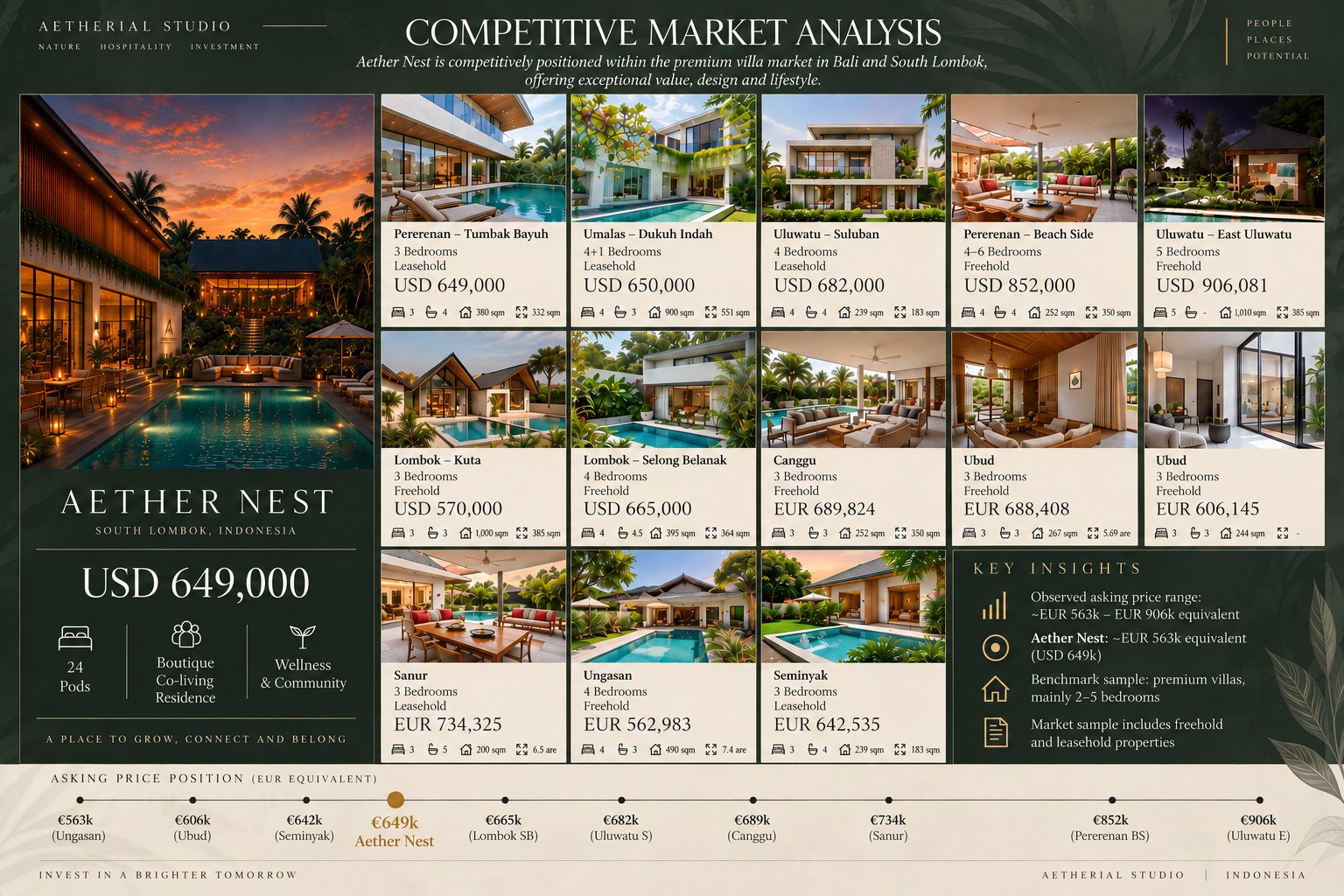
A complementary reference point, this time at the Bali and Lombok scale: here is where Aether Nest & Aether Den's budget ($649,000, ~€563,000 equivalent) sits relative to premium 2-5 bedroom villas listed by real estate agencies based in Bali and Lombok — the most direct comparison possible against what an investor would find today in the same regional market.
Across this sample of 13 premium villas (2-5 bedrooms, freehold or leasehold, Bali and Lombok), Aether Nest's budget sits in the lower third of the observed range (~€563,000 to ~€906,000 equivalent) — comparable to a 3-bedroom villa in Ungasan or Ubud, for a structurally different asset: 24 pooled pods with shared amenities, rather than a single villa.
Data sourced from listings by real estate agencies based in Bali and Lombok, accessed September 2026. Displayed prices converted to euros at the indicative rate of the day where needed. Limited sample (13 properties), for illustrative purposes — does not replace a formal market study. These figures are indicative, not guaranteed, and do not constitute investment advice.
The following is a synthesis of current Indonesian regulation and industry practice for a foreign-held hospitality investment. This is not legal advice: the final structure must be validated by an Indonesian notary (PPAT) and tax advisor before any investor commitment.
PT PMA + HGB title, never a nominee
A foreigner cannot hold freehold land (Hak Milik) in Indonesia. The legal, standard-practice route is a PT PMA (foreign-owned company) holding the land under Hak Guna Bangunan — right to build, 30 years renewable up to 80 years. Nominee arrangements, where an Indonesian citizen holds title on the foreign investor's behalf, are illegal and unenforceable in court — to be ruled out explicitly, regardless of any apparent cost saving.
Same budget, compared
For a comparable budget, the Bali market typically offers a 3-bedroom villa on ~300 m² of land, on a ~30-year leasehold (source: Propertia, April 2026 market study, 16,000+ listings — Canggu median $380,000, up to $800,000 at the 90th percentile for a well-located 3-bedroom villa). Here, the same order-of-magnitude investment gives access to an entire complex on ~1,050 m² of land (estimate), with an HGB land right reaching up to 80 years.
A separate entity per destination
The project is now focused on a single destination: South Lombok. A single PT PMA carries the entire site, which simplifies the structure compared to a multi-destination setup — but also concentrates risk on one location, a point to weigh against the Exit Strategy and Risk Analysis sections.
KBLI code confirmed before incorporation
100% foreign ownership is permitted for most hospitality/tourism categories under the Positive Investment List — but certain real-estate development sub-categories cap foreign ownership at 67%. The activity code (KBLI) must be confirmed per site before incorporation, not after.
Paid-up capital: threshold lowered in 2025
BKPM Regulation No. 5/2025 lowered the minimum paid-up capital for a PT PMA to IDR 2.5 billion (~USD 150-170K), down from a much higher prior threshold. A recent, favorable change that lowers the barrier to entry per entity incorporated.
Direksi & Komisaris — already in place
Unlike the rest of this section, this is not a pending recommendation: the two-tier governance structure required under Indonesian law (Direksi for day-to-day management, Komisaris for oversight) is already in place — see Team. Still to be formalized: the exact capital split between the two partners.
Tax optimization, in compliance
Item
Standard treatment
Optimization lever
Dividends to foreign shareholder
20% withholding (Art. 26)
10-15% if the shareholder holding company resides in a treaty jurisdiction (e.g. Singapore, Netherlands), with a valid Certificate of Domicile
Corporate income tax
22%
Flat rate, identical for any resident company — little legal optimization room beyond disciplined deductible-expense management
Annual land & building tax (PBB)
Up to 0.5% of NJOP value
Already low in absolute terms — not a significant optimization lever
Exit (disposal)
~5% BPHTB on land-asset transfer
A share transfer of the PT PMA rather than a direct land-asset transfer often avoids BPHTB for the acquirer — to be structured together with the Exit Strategy
Sources: BKPM regulation and Directorate General of Taxes (DJP) rules in force in 2026, practices reported by specialized Bali/Indonesia structuring firms. To be confirmed with the project's legal and tax counsel before contractual integration — rates and thresholds change regularly.
Transparency & Governance
Trust is earned through transparency
Every project developed by Aetherial Studio follows a structured governance framework, from the first feasibility study to operational performance.
Concept render — not site-specific
Dedicated project accounts
Each development operates with dedicated financial tracking and clear fund allocation.
Monthly reporting
Construction progress, milestones, occupancy and financial performance shared regularly.
Independent professionals
Architects, legal advisors, accountants and consultants bring independent expertise.
Data-driven decisions
Market intelligence, industry benchmarks and financial modelling before every decision.
Risk Analysis
Risks identified. Concrete mitigations.
Identified
Managed
Transparent
Concept render — not site-specific
Risk
Probability
Impact
Mitigation
Low occupancy year 1
Moderate
High
OTA launch + agency partnerships from D-60. 50% year-1 target already built into the pessimistic scenario.
IDR/EUR fluctuation
Moderate
Moderate
Partial hedging, revenue partly in USD (international OTAs). Possible upside if IDR depreciates.
Indonesian regulatory risk
Low
Moderate
Local PT structure, established legal partner, zoning compliance verified before acquisition.
Climate damage
Low
Moderate
Full insurance, resistant structural canvas, seismic-resistant design, 5%/yr maintenance fund.
Growing local competition
Moderate
Low
Differentiation through astronomy and radical intimacy. Barriers to entry: location, brand, experience.
Skilled staff availability
Low
Moderate
Aetherial Designs training program, salaries 20% above local market, housing provided.
The Pessimistic scenario already visible on the site incorporates the main risk factors above (reduced occupancy, lower ADR) — this is not a worst-case scenario, but a realistic conservative assumption.
The final land parcel has not yet been secured — the project is positioned within the corridor spanning from the Kuta/Mandalika core zone (KQ1 marker, see SEZ master plan) to the Gerupuk/Awang sector further southeast. This analysis focuses specifically on Gerupuk/Awang, on the SEZ's periphery, as a reference point for the lower end of the target corridor — the core zone (Kuta/Mandalika) would show price dynamics closer to the optimistic scenario below.
Before the numbers: this is an extrapolation based on observed trends, not a guaranteed prediction. Lombok's real estate market has a short history (essentially post-2020) and depends on factors no linear extrapolation can truly capture (state megaproject, social tensions, seismic risk). Three scenarios are built to give a realistic range rather than a misleading single figure.
The Base Trends Behind This Extrapolation
Land in the core, prime Mandalika SEZ zone has increased 3-6x between 2020 and 2026 — but that's the zone closest to the circuit, not the project's.
South Lombok as a whole: +30-50% over the past 3 years.
Rental yields are already compressing slightly (14-18% in 2023 → 12-16% in 2026 in the best locations).
Tourism grew from 280,000 arrivals (2022) to a projected 2.8 million (2026) — an explosive trajectory that must mechanically slow down (you can't keep doubling indefinitely).
Gerupuk/Awang being on the periphery of the SEZ (not inside it), a logical discount applies: this sector generally follows the core zone's dynamics with a 2-3 year lag and a smaller amplitude — the pattern already observed between Kuta Mandalika (core) and Selong Belanak (periphery).
The Three Scenarios in Detail
Median Scenario (Most Likely)
~15%/yr growth · price doubled by 2031
Fast-boat port and Bali-Lombok ferry fully operational by 2027, creating a real influx of day-trippers from Bali.
Tourism keeps growing but at a more moderate pace than 2022-2026 (base effect), around 15-20%/yr.
Gerupuk/Awang follows in the SEZ's wake with a 2-3 year lag, as Selong Belanak did before it.
The Aether project (18-month build) would come out of the ground in 2027-2028, right in the acceleration phase — fairly favorable timing.
Optimistic Scenario
~25%/yr growth · price nearly tripled
Assumes Gerupuk/Awang sees the same spectacular catch-up Kuta Mandalika experienced in 2020-2023 (3-6x in a few years).
Requires private investment (like Marina Bay City Lombok) to keep spilling east along the corridor.
Plausible but not the central scenario — a bet on rapid convergence, not an already-confirmed trend for this specific sector.
Pessimistic Scenario
~6%/yr growth · near-stagnation in real terms
Tensions around evictions at Mandalika (documented by the UN, still active in early 2026) trigger an AIIB funding suspension or a slowdown in public infrastructure projects.
An exogenous shock (global recession, major seismic event — tsunami risk documented above 40% over 50 years) breaks the tourism momentum.
The oversupply already visible in some Bali/Lombok areas (villas in a 'price war') reaches the sector faster than expected.
What This Concretely Means for the Decision
The time factor works in the project's favor in the median and optimistic scenarios — buying now, before Gerupuk/Awang has its own 'catch-up' moment, is consistent with the logic that worked at Kuta Mandalika and Selong Belanak.
The rental yield (Aether Nest & Aether Den's stated 14-22% ROI) will likely compress over the 5 years, following the trend already underway (14-18% → 12-16% in the SEZ core) — the top of the stated range (25%) is optimistic over time, to be treated as a ceiling rather than an expected average.
The real asymmetric risk is not the market, it's land/social — these scenarios assume 'normal' market functioning; they do not price in a rupture scenario (title dispute, project freeze following international human-rights pressure), which is not a gradual slowdown but a separate binary risk, to be handled through due diligence rather than a price curve.
Risk diversification: with three distinct assets (Aether Lodge, Aether Nest, Aether Den) rather than one large project, part of the execution risk is mechanically spread out — but all three remain exposed to the same underlying geographic/regulatory risk.
Indicative analysis built from observed market trends (2020-2026) and regional comparables (Kuta Mandalika, Selong Belanak) — does not constitute a guarantee of future performance or investment advice. To be cross-checked with a formal market study before any allocation decision.
An investor holding a stake in the PT PMA has several available exit routes. The options below are those retained for this report; precise terms (timelines, fees, conditions) remain to be confirmed with the project's legal counsel.
1. Share transfer of the PT PMA
The fastest route. The investor sells their shares; the buyer takes over the entity with the land, licenses and contracts as-is. No land title transfer is required — the company continues to hold the HGB. Effective rate of approximately 5% (Art. 26) for a non-resident seller, reducible via tax treaty through the shareholder holding company.
2. Asset sale
Direct sale of the land and building out of the company. Slower and generally less advantageous: a 2.5% final tax on gross transaction value (regardless of actual profit), plus BPHTB (~5%) borne by the buyer. Reserved for cases where the buyer does not want to take over the corporate structure.
3. Resale on the secondary market
The investor finds a new buyer, individual or institutional, for their shares or for the asset. The buyer pool is narrower than the primary market for PT PMA-structured land — the buyer must accept the existing structure or set up their own. Typical market timeline: 3 to 6 months between listing and signing.
Repatriation: proceeds from a disposal can be fully repatriated in foreign currency through authorized Indonesian banks, with no statutory cap. Sources: BKPM regulation and DJP rules in force in 2026, practices reported by specialized Bali/Indonesia structuring firms. To be confirmed with the project's legal and tax counsel before contractual integration.
Independent hotel assets (non-branded) typically trade between 4x and 8x annual EBITDA — more for scarce or differentiated assets, less in developing markets without an established institutional buyer base. For a 12-pod residence in South Lombok, a conservative 6x to 9x EBITDA range is used here.
Scenario (occupancy)
Annual EBITDA
Estimated value (6x-9x)
Multiple on invested capital
Conservative (55%)
€92,747
€556K – €835K
0.9x – 1.3x
Target (70%)
€118,041
€708K – €1.06M
1.1x – 1.6x
Optimistic (85%)
€143,336
€860K – €1.29M
1.3x – 2.0x
EBITDA from the performance scenario (see Financial Model), against the €649,000 total investment. The multiple does not account for transaction fees, disposal tax (see above) or an illiquidity discount, all of which reduce the net amount received by the investor.
To whom: a 12-pod asset remains too small for most institutional funds, whose minimum ticket typically exceeds \$5-10M. The most likely buyers share the same profile as the original investors — high-net-worth individuals seeking a tangible, differentiated asset (often already regional owners or won-over past guests), independent or boutique hotel groups looking to expand a portfolio across Indonesia/Southeast Asia, and occasionally family offices active in real estate + hospitality across the region. A buyout by one or more existing co-investors (a share purchase among partners) is also a common outcome for this type of structure.
Part 4
What's Next
Draft — to be confirmedNext Steps
From report to commitment
Indicative outline of the investment process. Exact timelines and documents will be confirmed by the Aetherial Designs team at the point of commitment.
Concept render — not site-specific
1
Conversation with the team
A one-on-one call to answer remaining questions on the report, the entry level considered, and the destination.
Indicative timing: 2-5 days
2
Non-binding reservation
A refundable reservation deposit secures the chosen level and destination while legal documents are reviewed.
Indicative timing: 1-2 weeks
3
Legal review and contracting
Final documents (structure, contract, payment schedule) are shared for review by your own advisors before signing.
Indicative timing: 2-4 weeks
4
Staged capital calls
Funds are called in stages, aligned with construction milestones — never as a single upfront payment (see Investment Terms for the detailed schedule).
Over 18 months (estimate), by milestone
5
Reporting and delivery
Monthly reporting through to delivery (see Governance), then operational launch and first revenue distributions.
Through to delivery + operations
What you'll need to prepare
Identification
Valid passport copy, for the standard KYC/AML verification of any PT PMA structure.
Proof of funds
Bank statement or attestation demonstrating the source and availability of the invested funds.
Personal legal/tax counsel
Optional but recommended — for reviewing the contractual documents and tax analysis in your country of residence.
Banking details
A bank account for the capital calls and, later, for receiving revenue distributions.
Aether Foundation
Every project leaves something behind
A fixed percentage of each project's budget is allocated to the Aether Foundation to support initiatives that strengthen communities, protect the environment and create opportunities for the future.
Concept render — not site-specific
How the Foundation Is Funded
Two distinct mechanisms, one recurring from opening, the other one-time at resale — not a simple isolated donation but a structured flow.
Track 1 — Share of Aetherial's Management Fee
Aetherial redirects 5 to 10% of the profits generated by its management fee (14% of each managed property's revenue) to the Foundation — recurring, every year of operation.
Track 2 — Investor Contribution
Investors for whom Aetherial manages a project are asked to contribute 1 to 2% of the revenue generated — recurring, alongside Track 1.
Occupancy scenario
Track 1 (5-10% mgmt fee)
Track 2 (1-2% of revenue)
Annual total (Nest+Den)
Conservative (55%)
2 361€ - 4 722€
3 373€ - 6 745€
5 733€ - 11 467€
Target (70%)
3 005€ - 6 009€
4 292€ - 8 584€
7 297€ - 14 594€
Optimistic (85%)
3 649€ - 7 297€
5 212€ - 10 424€
8 861€ - 17 721€
5-7 year cumulative (Target scenario), Tracks 1+2 combined: €36,500 - €102,200, plus the one-time contribution at resale (2-3% of sale value, see Exit Strategy) of €32,300 to €72,600 — a cumulative total of €69,000 to €175,000 over a typical holding period.
Based on the financial model (24 guests, €35 ADR) for Aether Nest & Aether Den combined — excludes Aether Lodge, not separately recalculated here at this level of detail.
The Foundation's 4 Programs
Not isolated donations — structured programs, each connected to a real issue already identified in this report.
🎓 Employment & Training
Flagship initiative: internship partnership with Politeknik Pariwisata Lombok (Puyung, Jonggat — same regency as the project), a state tourism polytechnic with Room Division, Food & Beverage and Travel programs. Supervised rotations across the residence's real roles (reception, housekeeping, F&B, wellness). Top-performing interns get priority access to the 34 direct jobs already identified (see Local Economic Impact), under the already-pledged +20% above-UMK wage policy.
🌱 Environment
Community water security — directly addresses the hydrogeological risk already flagged (see Site Conditions) by funding water access for the neighboring village. Reforestation and waste management alongside it.
💼 Entrepreneurship & Communities
A rotating interest-free micro-loan fund for local businesses (surf schools, warungs, crafts) — the capital recycles each year, an impact that far exceeds the initial outlay over time. Complemented by community infrastructure support.
📚 Digital Education
Scholarships and digital-skills training for local youth — feeds the next generation of candidates into the Politeknik Pariwisata internship program, even upstream of the training pipeline itself.
Local Economic Impact — The Aetherial Complex (Lodge + Nest + Den)
Beyond the Foundation's grants, the complex generates a direct economic impact on the local fabric — jobs, wages, supply chain — during construction and, on a recurring basis, once operating.
Construction Phase (One-Time Impact)
Indicator
Per Residence (Nest/Den)
Nest + Den Combined
Local construction spend (excl. land/margins)
342 193 €
684 386 €
Estimated labor share (35%)
119 768 €
239 536 €
Average on-site workforce
~49 people
~98 people
Aether Lodge not separately recalculated here in detail — no BOQ as granular as Nest/Den's is available for that project.
Operating Phase (Recurring Impact)
Role
Nest
Den
Lodge (estimate)
Reception/management
2
2
—
Housekeeping
3
3
—
F&B (warung)
3
3
—
Maintenance/garden/security
3
3
—
Wellness/activities
1
1
—
Total direct jobs (3 properties)
34
Reference wage: Lombok Tengah UMK 2026 = 2,741,526 IDR/month. Aetherial applies a +20% premium (already pledged in this report's Risk Analysis section) = 3,289,831 IDR/month (~€159). Total direct annual wage bill: ~€65,000/year injected into the local economy, on a recurring basis.
Multiplier Effect
With a conservative tourism multiplier (1.5x-2.2x, a range commonly cited for Southeast Asian tourism — every euro of wages generates secondary local spending: market, transport, artisans): total estimated local economic impact of €97,500 to €143,000/year during the operating phase, on a recurring basis.
Local supply chain already engaged: Walawastu (architect) and Arsa Karya (contractor) are already local businesses, not imported providers; the partner surf school (Surf Starter Package) generates recurring local revenue per resident; the warung is locally sourced.
Methodology: workforce figures and the multiplier are reasoned estimates, not data measured on this specific project — built from standard construction ratios (35% labor) and generic Southeast Asian tourism multiplier ranges. The real figure will depend on final vendor quotes and the definitive HR model.
Annexes
Supporting documents
List of annexes planned for the final version of the investment file. Some already draw on material present in this report (see cross-reference); the others require data only the project team can provide (real contractor quotes, AirDNA export, permit status, etc.) and are therefore not yet drafted.
A1Market Studies
Partial — public market data compiled, no commissioned study
No third-party commissioned study at this stage (see below for a formal per-destination study). Public market data compiled in August 2026:
Lombok tourism — Arrivals up 51% in 2024 vs pre-pandemic levels (3.6M visitors); Mandalika (the south-coast special economic zone) saw arrivals climb 51.4% to 1.2M in 2024, up 68.4% vs 2019. West Nusa Tenggara province (home to Lombok) is targeting 2.5M combined domestic + international arrivals in 2025. Lombok's star-rated hotels welcomed over 1.2M guests in 2025, led by mid-tier and luxury accommodation. Sources: Indonesian Ministry of Tourism, Discover Lombok Guide, Lombok Dispatch, Marina Bay City (2025-2026 data).
National tourism — Indonesia welcomed 13.9M international visitors in 2024 (+19% YoY), and 3.44M in Q1 2026 alone (+8.62% YoY). The government's "10 New Balis" strategy actively pushes traffic toward Lombok, Labuan Bajo and Raja Ampat to relieve pressure on Bali. Sources: Travel And Tour World, Nomad Lawyer (Q1-Q2 2026 data).
Global glamping market — Estimated at $3.8-4.2 billion in 2026, growing at a 9.5% to 12.7% CAGR depending on the research firm, reaching $7-9 billion by 2033-2034. Asia-Pacific represents ~18% of the global market ($0.67-0.74 billion in 2025-2026) and is among the fastest-growing regions. Sources: Grand View Research, Fortune Business Insights, Mordor Intelligence, Technavio, Business Research Insights (2026 reports).
Figures aggregated from several public research firms, not commissioned by the project — to be cross-checked with a dedicated third-party study before contractual integration. A formal per-destination market study remains recommended beyond this compilation.
A2 AirDNA
Provided — South Lombok
AirDNA data export (real occupancy, ADR, RevPAR), to substantiate the financial model's assumptions beyond the manually verified ADR (see Competitive Analysis).
AirDNA export, Lombok market (539 active listings): average market annual revenue Rp597.38M, average occupancy 56.45%, average nightly rate Rp3,152,544 (≈€166 at the report's indicative rate).
Comparison point
The financial model (Base scenario) now uses South Lombok's real ADR (IDR 2,200,000/night, ≈€116) — recalculated on 2 August 2026 (see Financial Model). This is more conservative than the market average above (≈€166), leaving a safety margin. Target occupancy (62-70% depending on level) remains above the market average (56.45%), a point to validate with the project team.
A3Comparables
Partial — see Competitive Analysis
Detailed profiles of the comparable properties cited (Competitive Analysis): photos, guest reviews, estimated occupancy, price history.
A4Permits
Not yet initiated
No permit process has been initiated at this stage — consistent with the project's current status (fundraising, land not yet acquired). Permit filings (PBG — building permit, SLF — completion/functionality certificate, environmental) are expected after land acquisition, during the Permits phase of the timeline (roughly month 3 to 7 of the project's 18 months (estimate) — see Delivery Timeline). This annex will be updated file by file once the process is underway.
A5Detailed Planning
Partial — see Delivery Timeline
Task-by-task, trade-by-trade Gantt-style schedule, beyond the phase durations already given in Delivery Timeline.
A6Cost Quotes
Partial — gap vs final model explained, real tent quote integrated
Real quotes from construction firms and suppliers, line by line, to substantiate Use of Funds beyond the current cost structure.
Resolved — gap explained
No real construction quote exists yet for the pod format — all cost lines (foundation, pod units, permits, furnishing) are placeholder estimates pending vendor bids, unlike the original tent-based design on this same site, which had been calibrated against real tent and construction quotes.
A7Sensitivity Analysis
Provided — dedicated tab in the Excel model
Available in the downloadable Excel model ('Sensitivity Analysis' tab, see Financial Model) — the isolated impact of occupancy, blended ADR, variable costs, and fixed costs on ROI, plus a 'tornado' summary ranking each variable by impact magnitude for a ±10% change.
Headline result: occupancy and ADR have an identical, dominant impact on ROI (±8.5 points for a ±10% change) — well above variable costs (∓6.5 points) and especially fixed costs (∓1.3 point only). This is what justifies structuring this report's scenarios around occupancy rather than cost assumptions.
A8Pessimistic / Realistic / Optimistic Scenarios
Provided — all 3 scenarios modeled (Conservative/Target/Optimistic)
All three scenarios (Conservative 55%, Target 70%, Optimistic 85% occupancy) are modeled on the main site (Performance), in this report (Financial Model), and in the downloadable Excel model — with ROI, breakeven and net profit for each.
A9Tax Structure
Partial — see Legal Structure
Complete, quantified tax memo (corporate tax, VAT, withholding by investor jurisdiction), beyond the summary table already in Legal Structure.
A10Distribution Schedule
Partial — collection mechanism confirmed, dividend frequency to be specified
Confirmed mechanism: revenue from each booking platform (OTA, direct) is paid directly into the project's PT PMA bank account — never routed through Aetherial Studio. Aetherial Studio invoices its management fee at month-end, for payment at the start of the following month, like any other service provider. This means Aetherial Studio never holds client funds — an important counterparty risk reduction for investors (see also Legal Structure and Governance).
Still to be specified: how often the PT PMA itself distributes profits to shareholders (monthly, quarterly, annually) — a separate governance decision from the collection mechanism above, to be formalized in the shareholders' agreement.
A11Refinancing Plan
Provided — no bank refinancing, possible reallocation
Confirmed: the project is 100% equity-financed — 90% investors / 10% Aetherial Studio. No bank-loan refinancing is planned at this stage.
Point to clarify: once the resort reaches stabilized operations, available funds (beyond investor distributions) could be reallocated toward another project in the Aetherial Studio pipeline, rather than systematically redistributed. This is a real governance decision, not a technical detail: it determines who decides (investors, Aetherial Studio, or a joint vote), at what available-cash threshold, and what say investors retain over the use of their capital beyond the original project. To be formalized explicitly in the shareholders' agreement — see also Governance and A10 (Distribution Schedule), which raises the same question about dividend frequency.
A12Cost of Capital
Provided — 100% equity structure
With the structure 100% equity-financed (see A11 above), there is no cost of debt to blend in — so no classic weighted average cost of capital (WACC) calculation applies. The cost of capital reduces to the return required by the investor, already published in this report: 20% annual (Target scenario, 70% occupancy) — see Performance and Financial Model. This rate is used consistently throughout this report wherever a reference return is needed.
If a bank refinancing is activated in the future (see A11), a true WACC calculation would become relevant and would need to incorporate the cost of Indonesian debt for this type of asset — to be revisited at that point.
A13Inflation
Provided — assumptions based on official targets
Indonesia: Bank Indonesia targets 2.5% ± 1% inflation for 2025-2027 (i.e. a 1.5% to 3.5% range). Actual inflation: 2.88% in July 2026, after peaking at 4.76% in February 2026. The OECD projects 3.4% for full-year 2026. Assumption used in this report: 3.0%/year (upper-mid of the official target), applied to local operating costs (staff, maintenance, supplies).
Investor currency (EUR): official ECB target of 2.0%/year. Assumption used: 2.0%/year, for the portion of the model expressed in euros (the initial investment and investor reporting).
Applied in the model: the 3%/year ADR growth already used in the 5-year projection (see Financial Model and the Excel model) is consistent with — and slightly below — the 3.0% local inflation assumption, which is conservative (revenue growth tracking cost inflation rather than exceeding it).
Sources: Bank Indonesia, OECD (Economic Outlook 2026), European Central Bank. Simplified constant-rate assumptions over 5 years — a more refined model could vary the rate year by year.
A14Exchange Rate
Partial — base rate already stated
This report uses an implicit rate of 20,650 IDR to 1 EUR. This annex will detail ROI sensitivity to IDR/EUR exchange rate fluctuation.
A15Stress Tests
Provided — combined shock scenario
The Conservative scenario (see Financial Model) isolates a single adverse variable — 55% occupancy. A realistic stress test stacks several shocks at once:
Shock
Assumption
Occupancy
55% (as in the Conservative scenario)
Construction cost overrun
+15%
Fixed operating costs
+10%
Result: EBITDA ≈ €78,835 (Conservative EBITDA reduced ~15% by the stress scenario), against an inflated investment of ≈ €746,350 (€649,000 + 15%) — an annual ROI of roughly 10.6%, down from 14% for the isolated Conservative scenario. The project would remain profitable under this combined shock, but with a reduced safety margin — to be re-validated once real cost figures replace these illustrative placeholders.
Indicative calculation derived from the Excel model (Sensitivity Analysis tab) — does not cover a simultaneous EUR/IDR currency shock, which would compound this result further. A formal multi-variable stress test (Monte Carlo) remains recommended beyond this simplified estimate.
A16Geopolitical Risks
Provided — summary
A complement to the risk table already in this report (see Risk Analysis), focused on political and regulatory rather than operational risk.
Foreign investment regulation: favorable in recent years (e.g. the 2025 reduction in minimum PT PMA paid-up capital — see Legal Structure), but investment policy remains a government prerogative and can change. No known or anticipated adverse change at this time.
Capital controls / repatriation: no current statutory cap on repatriating funds in foreign currency through licensed banks (see Exit Strategy) — a risk to monitor rather than a present issue.
National stability: Indonesia has a regular electoral cycle (next presidential election in 2029) with no recent history of abrupt economic policy reversal following a change of government.
Regional tourism demand: a major disruption to international air travel (regional conflict, health restrictions) would affect footfall — a risk shared by any internationally-dependent tourism destination, not specific to this project.
Summary compiled from public sources (see Legal Structure and Exit Strategy for detail). Does not replace a formal political/country risk opinion — to be cross-checked with the project's legal counsel.
A17Operator Succession
Pending
Continuity plan in case the founder or a key team member becomes unavailable — a key-person dependency risk to address explicitly.
A18Measurable ESG Indicators
Partial — indicator framework defined, actual values pending post-opening
With the resort not yet operational, no actual values exist yet. Below is the indicator framework planned for quarterly tracking once open — beyond the qualitative commitment already presented elsewhere on the site.
Dimension
Indicator
Tracking frequency
Environmental
Water consumption per guest-night (litres/guest-night)
Quarterly
Environmental
Share of solar energy in total consumption (%)
Quarterly
Environmental
Single-use plastic bottles avoided (units, via on-site water filtration)
Quarterly
Social
Local jobs created — headcount and % South Lombok residents
Quarterly
Social
Aether Foundation beneficiaries (number of people/households supported)
Annual
Social
Share of supplier spend with Indonesian companies (%)
Annual
Indicative framework proposed by Aetherial Studio — to be validated and possibly expanded with the project team before contractual integration or communication to investors as a firm commitment.
A19Post-Opening Management KPIs
Partial — reporting already announced in Governance
Standard operational dashboard investors will receive once the lodge is open (actual occupancy, actual ADR, guest NPS, incidents), tied to the monthly reporting already announced in Governance.
Legal Notice
Legal notice
Financial projections, ROI rates, breakeven thresholds and scenarios presented in this document are non-contractual simulations. They do not constitute a guarantee of future performance, nor a contractual commitment from Aetherial Designs or Aetherial Studio. All investment carries a risk of capital loss.
This document is shared confidentially with a limited number of potential investors. It may not be reproduced, distributed or communicated to third parties without prior written consent from Aetherial Designs.
Amounts expressed in currencies other than EUR and IDR are indicative only, at a non-guaranteed average market rate.